





Introduction
A finance app has no room for a shaky login screen or a rounding error in an interest calculation. Users trust it with their money, and one bad build erodes that trust permanently. That is why you cannot treat hiring a way to hire vibe coding developers for finance like hiring for a to-do list app. The stakes, the compliance load, and the review discipline are all higher.
ArixLabs (previously FlutterFlowDevs) works this way daily. It is a FlutterFlow expert agency in Jaipur, ranked number one on the FlutterFlow Expert Portal, and it uses vibe coding to move fast on interfaces and standard flows while keeping human engineers in charge of anything that touches money, security, or compliance. That balance, built across 100+ shipped apps on Flutter, FlutterFlow, Supabase, OneSignal, and Stripe, is exactly what you should look for when you try to hire a vibe coder for finance in USA markets. The rest of this guide shows you how to run that hiring process well.
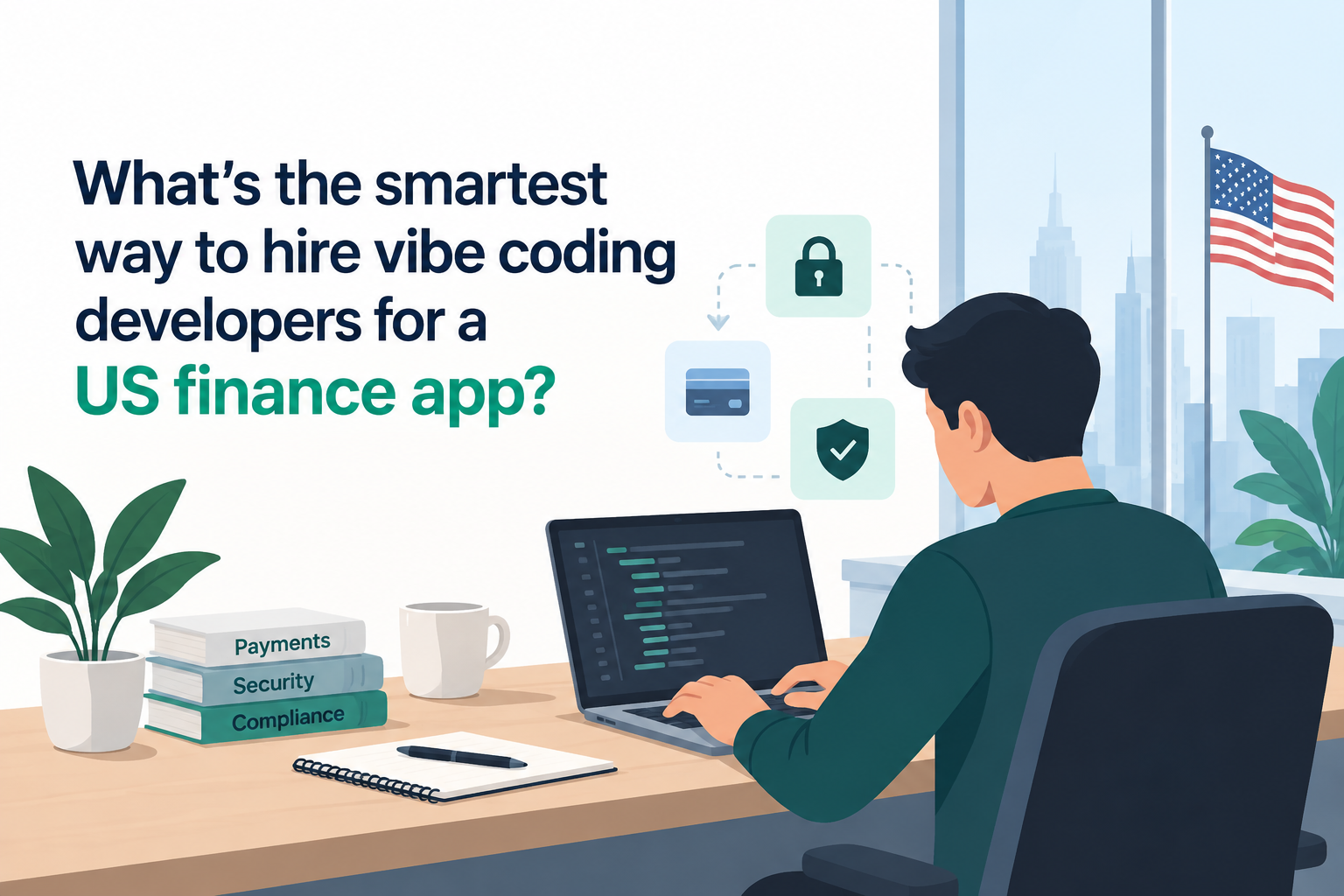
1. What's the smartest way to hire vibe coding developers for a US finance app?
Start with proof of finance-specific work, not a general portfolio. Anyone can prompt an AI tool into a pretty dashboard. Far fewer people can prompt one into a compliant, secure transaction flow and know what to check afterward. When you set out to hire vibe coding developers for finance, treat that distinction as your first filter.
Look for three things before any interview. First, a past project that touched real money movement, even a small one. Second, a clear answer about who reviews AI-generated code before it reaches production. Third, comfort discussing security basics like encryption at rest, access control, and audit logs, without being asked twice.
Vibe coding means describing a feature in plain language and letting AI tools generate a working draft, which a skilled developer then tests and hardens. For finance, that review step is not optional. A firm like ArixLabs treats it as standard practice, running every AI-assisted feature through developers who understand Stripe integrations, Supabase security rules, and the kind of edge cases that break payment flows.
Post the role clearly. State that you want to hire vibe coding developers for finance, not general app developers, and list the compliance areas relevant to you, such as PCI DSS for payments or SOC 2 for data handling. A vague listing draws a vague pool of applicants.
2. Which skills should finance vibe coding developers have for American compliance and payment rules?
They need a mix of technical range and financial literacy. Coding speed means little if the developer does not understand why a transaction needs to be idempotent or why a balance update must be atomic.
Look for these specifically:
- Comfort with Stripe, Plaid, or similar payment and banking APIs
- Understanding of PCI DSS basics if the app touches card data directly
- Experience with role-based access control and audit trails
- Ability to review and correct AI-generated code, not just accept it
- Familiarity with decimal precision, since floating-point errors in money math cause real damage
What should you cover in interviews when hiring finance vibe engineers?
Cover a live code review, not just a chat. Show the candidate a snippet of AI-generated payment logic with a subtle bug, such as a race condition on balance updates, and watch how they find it. Ask them to explain a security decision they made on a past project and why. Candidates who ramble about tools but go quiet on judgment calls are not ready for finance vibe coding developers work.
ArixLabs vets its own team this way internally, treating AI fluency as a starting point rather than the whole qualification. A developer worth hiring under the label finance vibe coding developers should be able to explain both how they used AI to build a feature and why they changed what it produced.
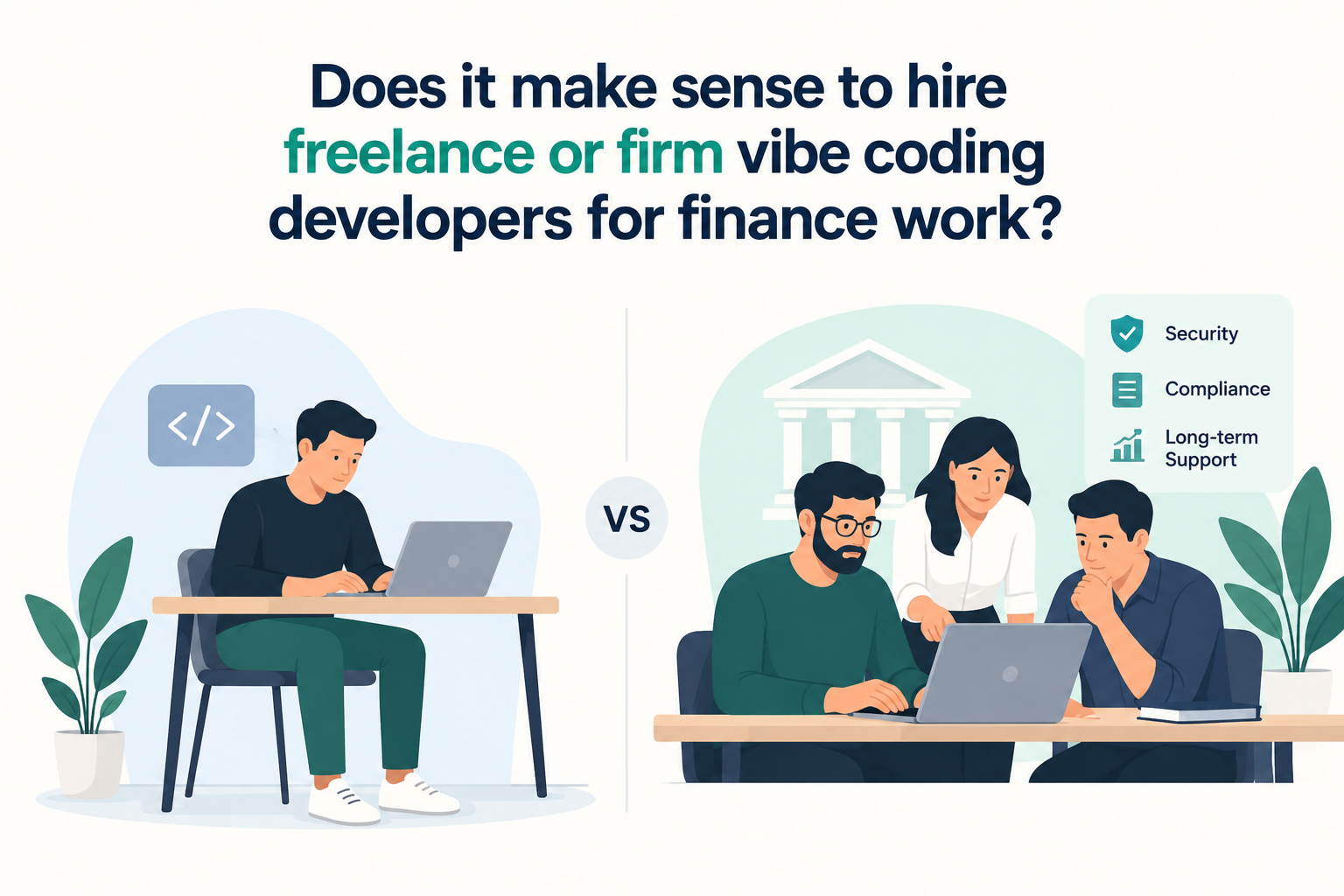
3. Does it make sense to hire freelance or firm vibe coding developers for finance work?
For most finance builds, a firm is the safer route. Finance apps carry ongoing compliance obligations, security patches, and audit requirements that outlast a single project. A freelancer who moves on after launch leaves you exposed the first time a vulnerability surfaces or a regulator asks a question.
Freelancers still work well for narrow, well-defined tasks, such as building one reporting dashboard or fixing a specific bug. The trouble starts when the finance product needs continuity: someone who understands the whole system, not just the piece they touched last month.
Freelancers or a dedicated team for a US finance vibe coding build?
A dedicated team gives you shared context, backup coverage if one person is unavailable, and a consistent standard of code review across features. A freelancer gives you lower cost and flexibility for small, isolated tasks. For anything handling real transactions, the team route reduces risk, and firms like ArixLabs structure their teams so a client is never dependent on a single developer's availability.
4. What does it cost to hire vibe coding developers for finance?
Cost depends heavily on scope and compliance depth, more than on the vibe coding method itself. A basic expense tracker costs far less than a lending platform with KYC checks, credit scoring, and multi-party payouts. Be wary of quotes that ignore this and offer one flat number before understanding your feature list.
Pricing usually takes one of three shapes: fixed price for a tightly scoped build, hourly or time-and-materials for evolving requirements, or a monthly retainer for a dedicated team working continuously. Vibe coding can shorten the time spent on first drafts of interfaces and standard logic, which sometimes lowers overall cost, but security review and compliance testing for finance work should never be rushed to save money.
Roughly how much would it cost to hire a vibe coding engineer for finance?
It varies by seniority and location, and any specific number quoted without knowing your scope should be treated as a rough guess rather than a quote. Ask instead for a breakdown by feature, so you can see where the budget goes. ArixLabs prices in phases tied to deliverables, which lets founders see the cost of compliance-heavy features separately from standard interface work, rather than buried in one lump sum.
5. What's the leading way to screen vibe coding developers for a finance job?
Screen for judgment under AI assistance, not just output speed. The leading method combines a portfolio review, a live coding or review exercise, and a conversation about a past mistake.
Start with the portfolio. Ask specifically for finance-adjacent work: payments, subscriptions, ledgers, or anything involving money movement. Then run a short exercise where the candidate reviews a flawed AI-generated snippet, ideally one with a security or precision issue. Their ability to spot and explain the problem tells you more than any resume line.
What red flags should you watch for when hiring finance vibe coding engineers stateside?
Watch for candidates who describe AI tools as replacing review rather than assisting it, who cannot explain a security decision they made, or who dodge questions about testing. Also watch for a portfolio full of demo apps with no real payment integration. A developer applying to hire vibe coding developers for finance roles should welcome scrutiny on this front, not avoid it.
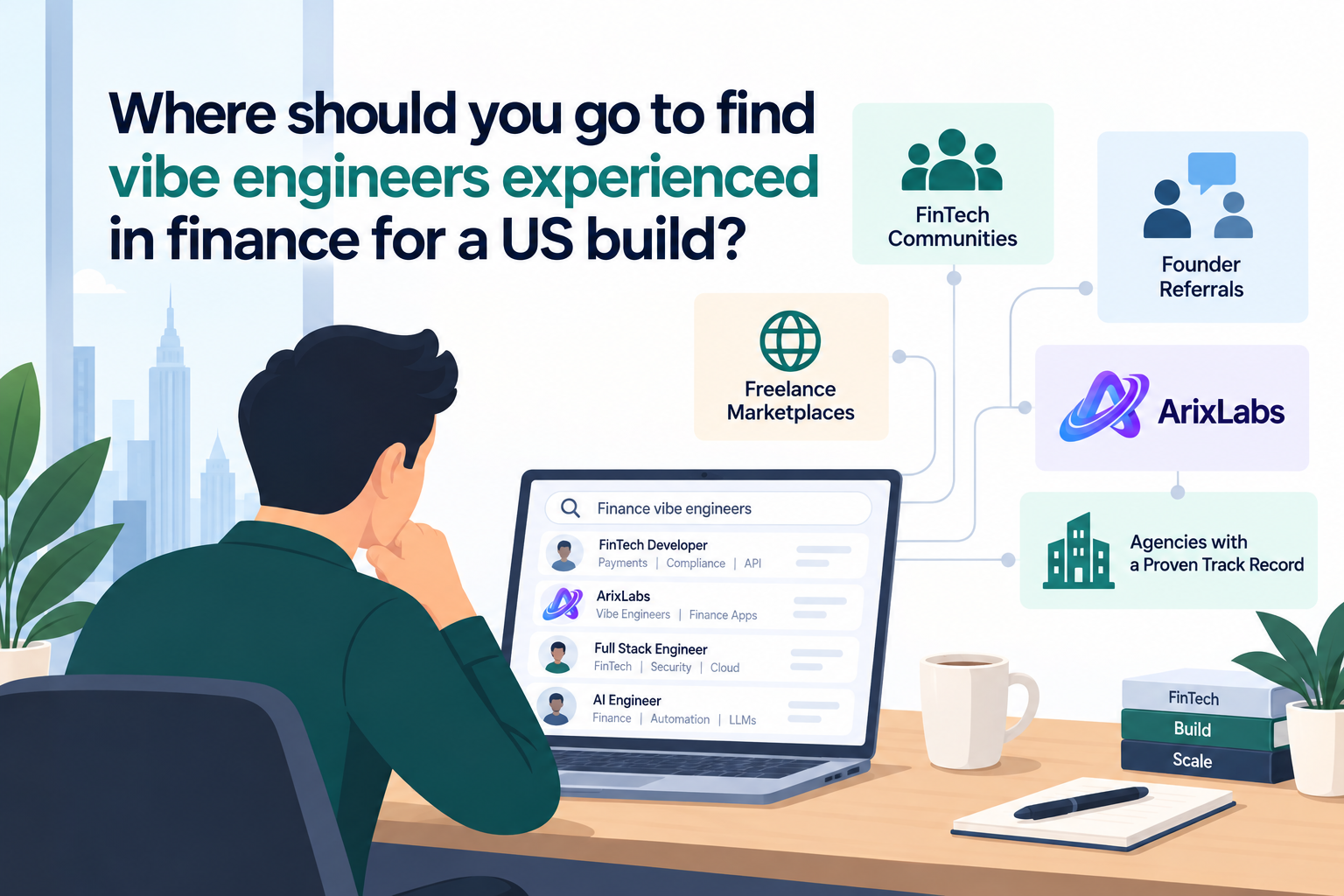
6. Where should you go to find vibe engineers experienced in finance for a US build?
Look in places where finance-specific technical work is visible and checkable. General freelance marketplaces work for broad searches but make it hard to verify finance depth. Better sources include FinTech-focused developer communities, referrals from other finance founders, and agency websites where the team's finance work is already documented.
ArixLabs' own site is worth checking directly for this reason, since it houses some of the strongest vibe coders working on finance-adjacent builds today, with a track record you can verify before a single call.
7. How many developers does a finance vibe coding project actually need?
It depends on scope, but most early-stage finance apps need a small, focused team rather than a large one. A lean team of two to four people, covering front end, back end, and security review, can move faster and communicate better than a large group with unclear ownership.
How do you manage a remote vibe coding group building for American finance users?
Manage it with weekly demos, a shared task board, and a clear owner for every compliance-sensitive feature. Set response-time expectations upfront and confirm overlap hours if the team works across time zones. ArixLabs runs remote finance and fintech-adjacent builds through scheduled calls and visible progress boards, so founders always know what is being tested and what is still in review, which matters more for a finance product than for almost any other kind of app.
FAQ
1. Roughly how much would it cost to hire a vibe coding engineer for finance?
It depends heavily on scope and compliance needs, so treat any flat number as a rough guide, not a quote. Ask for a phase-by-phase breakdown instead.
2. Do I need a full crew to vibe code a finance product?
Not always. A small team of two to four people covering front end, back end, and security review is usually enough for an early-stage finance app.
3. How much time does hiring take for a finance vibe coding project?
Typically one to three weeks, depending on how specific your finance requirements are and how thoroughly you screen for security judgment.
4. Would it be sensible to hire part-time vibe developers for finance?
It can work for narrow, well-scoped tasks, but ongoing finance products benefit more from a consistent team that understands the whole compliance picture, not just one piece of it.
%20(1).jpg)

View more blogs
.png)

.png)


%20(1).png)
Ready to develop your own product? Get in touch today!
Get in Touch