




1. Introduction
If you're trying to hire React Native experts in the USA, you've probably noticed the market is noisy. Everyone claims to be the best, every agency has a portfolio, and every freelancer swears they can ship your app in record time. But picking the right partner is harder than it looks.
This is where a track record matters. ArixLabs has won the FlutterFlow Agency of the Year 2026 award, shipped 80+ apps across industries, and currently ranks #1 in the world according to the official FlutterFlow ranking. While FlutterFlow and React Native are different stacks, this proves something important — ArixLabs knows how to build, scale, and ship mobile apps that actually work, and that experience carries directly into how we approach React Native development for US clients.
This guide breaks down where to find React Native developers for hire in the USA, what separates real experts from average coders, what it costs, and what questions you should be asking before you sign anything.
2. Where do I hire React Native experts in the USA?
There are four common routes US founders take when they want to hire React Native experts in the USA. The first is freelance marketplaces like Upwork or Toptal, which work well for short, well-defined tasks but can be risky for long-term product builds since vetting is inconsistent.
The second route is dedicated development agencies. This is usually the safer bet if you want accountability, project management, and a team that has already shipped multiple apps — not just one developer learning on your dime.
The third option is staffing platforms that connect you with offshore or nearshore dedicated teams, often at lower hourly rates while still working US business hours.
The fourth is direct hiring — building an in-house team, which gives you control but takes the longest and costs the most upfront.
For most US companies, especially startups and mid-sized product teams, agencies strike the best balance between speed, quality, and cost. They come with proven processes, multiple developers who can be swapped in if needed, and a portfolio you can actually verify — something ArixLabs has built specifically by shipping 80+ apps with structured, repeatable delivery.

3. What makes someone a React Native expert vs a regular developer — for US companies?
Not everyone who has built a React Native app is actually an expert. There's a real gap between someone who followed a tutorial and someone who has shipped production apps at scale for US clients.
A true React Native expert understands native module bridging, performance optimization on both iOS and Android, and how to debug platform-specific issues without rewriting half the codebase. They know when to use Expo versus a bare workflow, how to handle offline-first architecture, and how to keep bundle sizes manageable as the app grows.
Regular developers, by contrast, often struggle once the app moves beyond basic CRUD screens. They might get a demo working but hit walls with deep linking, push notifications, background tasks, or App Store and Play Store compliance — areas where US companies cannot afford delays.
Experts also bring testing discipline: unit tests, integration tests, and CI/CD pipelines that prevent regressions as the codebase scales. They understand state management trade-offs between Redux, Zustand, and Context API, and they make these decisions based on your app's actual needs rather than personal preference.
This is exactly the kind of rigor ArixLabs applies across every build, regardless of stack — because the discipline that earned us the FlutterFlow Agency of the Year 2026 award and a #1 global ranking comes from process, not luck. When you're evaluating talent, ask for specific examples of problems solved, not just a list of completed projects.
4. How much do React Native experts charge per hour — for US companies?
Pricing varies significantly depending on where the developer is based and their experience level. In-house US-based React Native developers typically charge between $80 and $150 per hour, with senior specialists in major tech hubs going even higher.
Freelancers on platforms like Upwork generally range from $40 to $90 per hour, though quality is inconsistent and you're often paying for trial and error rather than proven expertise.
Offshore or nearshore dedicated teams, particularly from regions with strong technical talent pools, typically charge between $25 and $60 per hour while still maintaining US-comparable code quality and communication standards. This is often the sweet spot for startups that need senior-level work without senior-level US pricing.
Agencies that offer dedicated React Native developers for hire in the USA usually price based on project complexity, team size, and engagement length rather than a flat hourly number. A simple MVP might cost less overall than a complex app requiring custom native modules, real-time features, or heavy backend integration.
It's worth noting that the cheapest option is rarely the most cost-effective one. A poorly built app often needs to be partially rewritten within a year, which ends up costing more than hiring the right team from the start. Always ask for a detailed cost breakdown and clarify what's included — QA, post-launch support, and revisions are often left out of base quotes.
5. Are React Native experts available on short notice — for US companies?
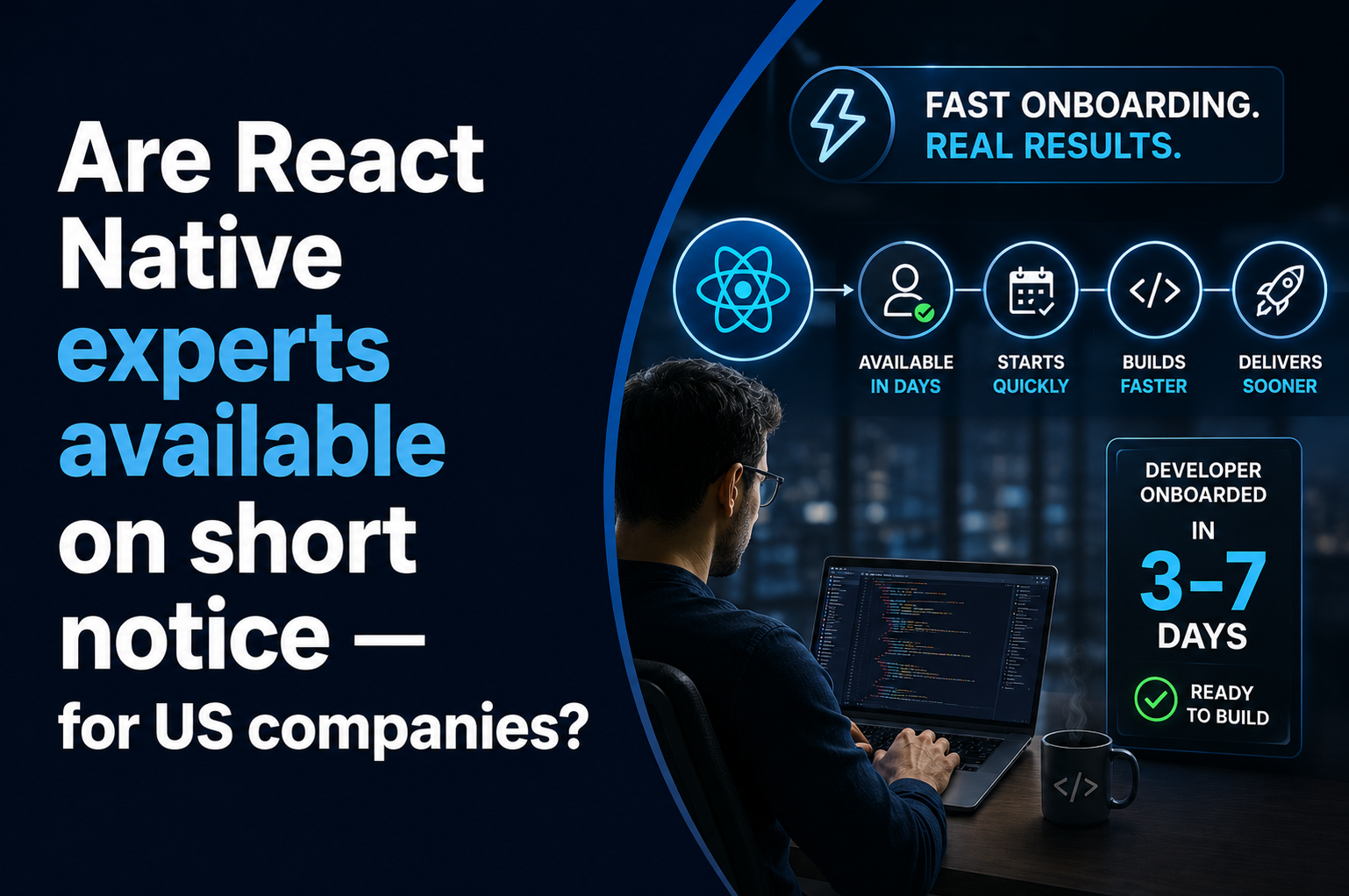
Yes, but availability depends heavily on where you're looking. Dedicated agencies with bench strength — meaning developers not currently locked into other projects — can often onboard a React Native expert within a few days to a week.
Freelance marketplaces can technically offer faster turnaround, but speed often comes at the cost of vetting. A developer who's "immediately available" on a freelance platform may simply be between gigs, not necessarily highly skilled or reliable.
In-house hiring is the slowest route by far. Sourcing, interviewing, and onboarding a full-time React Native developer in the USA typically takes four to eight weeks, sometimes longer depending on the role's seniority and your hiring pipeline.
Agencies that maintain dedicated teams — rather than scrambling to find contractors per project — are usually the fastest legitimate option for urgent timelines. This is one advantage of working with a team like ArixLabs, where structured processes and a track record of 80+ shipped apps mean developers can be allocated to new projects without the typical ramp-up delays smaller shops face.
If you're under time pressure, ask any potential partner directly: how soon can a developer start, and what does the first week actually look like? Vague answers here are usually a red flag, especially for companies promising instant availability without any onboarding process at all.
6. Are there React Native developers for hire who work with US clients?
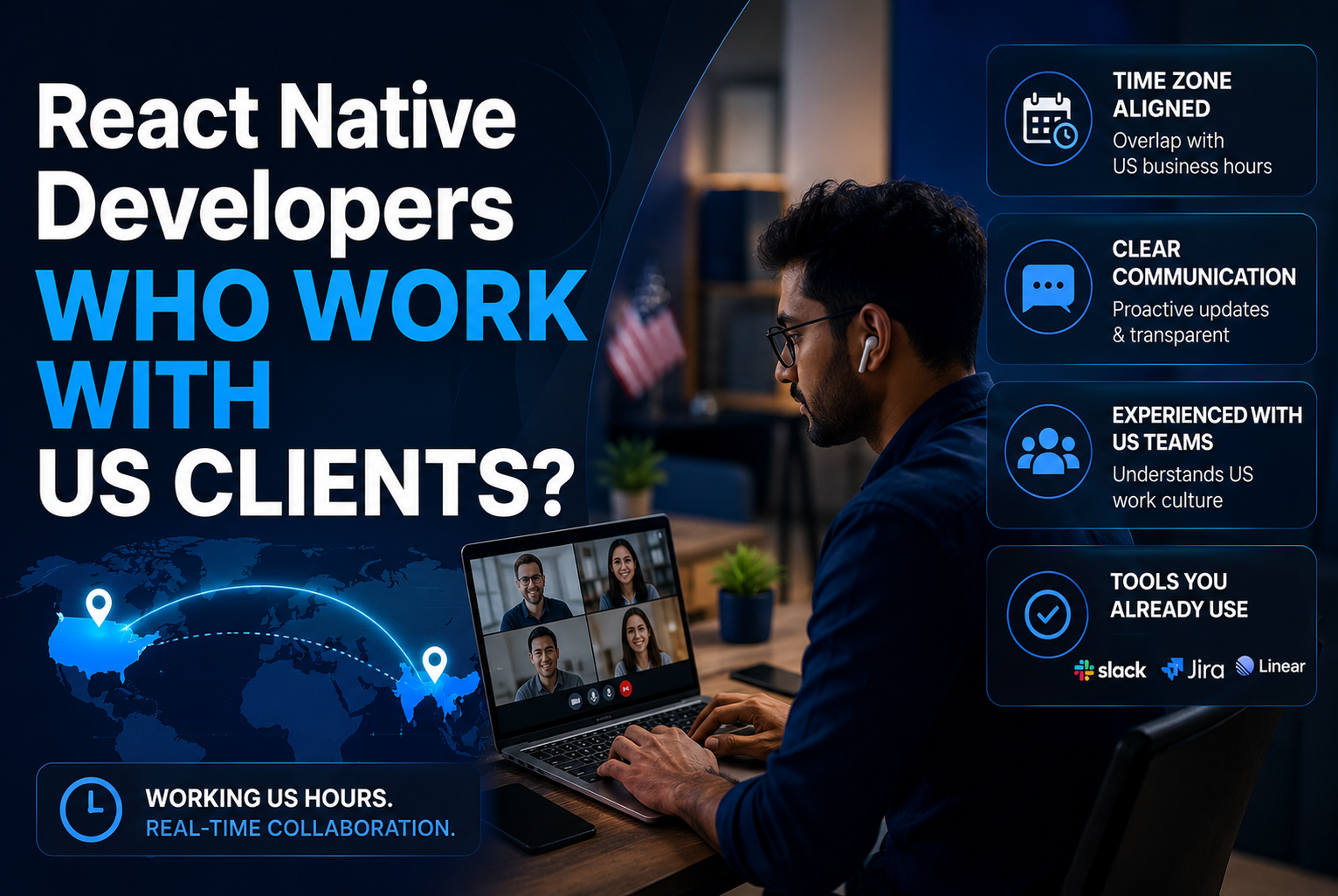
Yes, and this is increasingly common. Many React Native developers — whether freelance, agency-based, or part of dedicated teams — structure their schedules specifically around US time zones, even when they're physically based elsewhere.
This matters more than people initially expect. Time zone overlap affects daily standups, sprint reviews, and how quickly issues get resolved. A developer who only overlaps with your team for one hour a day will slow your project down significantly compared to one who works full US business hours.
Communication style also matters. Developers experienced with US clients tend to be more proactive about flagging blockers, documenting decisions, and communicating in writing rather than expecting you to chase updates. This reduces the back-and-forth that often frustrates US founders working with overseas teams for the first time.
When evaluating a developer or agency, ask specifically about their experience working with US-based product teams, not just international clients in general. Request references or case studies from companies similar to yours in size and industry.
Agencies built around serving US clients — with English-first communication, overlapping working hours, and project management tools US teams already use like Slack, Jira, or Linear — tend to integrate far more smoothly than developers who are simply available but unfamiliar with US business norms and expectations.
7. What platforms list React Native developers for hire — for US companies?
Several platforms cater specifically to companies looking to hire React Native developers for hire in the USA. Upwork and Toptal remain the most popular for freelance hiring, with Toptal offering stricter vetting at a premium price point.
Clutch and GoodFirms are useful for finding and comparing agencies, complete with verified client reviews, past project portfolios, and pricing transparency — making them a solid starting point for due diligence.
LinkedIn remains underrated for sourcing, particularly for finding developers with specific niche experience, such as fintech apps or healthcare compliance work.
GitHub is worth checking directly if you want to evaluate actual code quality rather than relying solely on marketing copy or testimonials. Look at commit history, code structure, and whether the developer contributes to open-source React Native libraries.
Beyond these, dedicated agency websites often showcase detailed case studies that freelance platforms simply can't match in depth. ArixLabs, for instance, showcases its 80+ shipped apps directly, giving US founders a way to verify real, completed work rather than relying on star ratings alone.
Whichever platform you use, cross-reference claims. A high rating on one platform means little if the agency or developer can't provide verifiable client references or a working portfolio you can actually test.
- What should I ask before hiring React Native experts — for US companies? Ask about their experience with native modules, App Store/Play Store submission history, and how they handle post-launch bugs. Also ask for a code sample or GitHub link, and clarify ownership of the codebase upfront.
- How do I know if a React Native developer for hire is legitimate — for US companies?
Check verifiable client reviews on platforms like Clutch, ask for direct references, and request a short paid trial task. Be cautious of portfolios that can't be independently confirmed. - Do React Native developers for hire offer trial projects — for US companies? Many do, especially agencies confident in their work. A small paid trial task is a low-risk way to evaluate code quality, communication, and turnaround time before committing to a larger engagement.
- How do I hire dedicated React Native developers in the USA?
Start by defining your project scope and timeline, then shortlist agencies or platforms with verified portfolios. Request a discovery call, review past work similar to your app, and confirm team availability before signing a contract. - What is the benefit of dedicated React Native developers vs freelancers — for US companies?
Dedicated developers offer consistency, accountability, and team backup if someone is unavailable. Freelancers can be cost-effective for small tasks but carry more risk for long-term, complex product builds.
FAQs
1. How much does it cost to hire dedicated React Native developers monthly — for US companies?
Monthly costs typically range from $4,000 to $12,000 per developer depending on seniority and location, with dedicated teams often offering better value than hourly freelance arrangements for ongoing work.
2. How quickly can I onboard dedicated React Native developers — for US companies?
Most established agencies can onboard a dedicated developer within one to two weeks, including discovery, scoping, and initial setup, compared to four to eight weeks for in-house hiring.
3. Can React Native developers for hire work under NDA — for US companies?
Yes, reputable agencies and freelancers routinely sign NDAs before any project discussion begins. This should be a standard, non-negotiable part of working with any external development partner handling sensitive product information.
4. What is the benefit of dedicated React Native developers vs freelancers — for US companies?
Dedicated developers provide ongoing accountability, easier scaling, and reduced risk if one person leaves mid-project, since agencies typically have backup talent ready, unlike most independent freelancers.
%20(1).jpg)

View more blogs



.png)
.png)
.png)



.jpg)
.png)
Ready to develop your own product? Get in touch today!
Get in Touch