



Introduction
Insurance software has one job it cannot fail at: getting the numbers right. A miscalculated premium, a claims flow that loses a submission, or a quote engine that spits out the wrong figure does not just annoy a customer, it can trigger a compliance headache and a very awkward phone call. So when you set out to hire vibe coding experts for insurance apps USA carriers can rely on, you are not shopping for a pretty app. You are shopping for people who will not let a rounding error near your premium calculator.
ArixLabs builds this way on purpose. The team describes what a feature should do in plain language, lets AI tools produce a fast first draft of the interface and logic, and then hands the parts that touch money, data, or compliance to engineers who actually check the work before it ships. That is the whole point of doing vibe coding properly: speed where speed is safe, human judgment where it is not. It is also why ArixLabs does not pigeonhole itself into one industry. The team has shipped 100+ production apps across different domains, and that range is a big part of why founders searching for best vibe coding developers in US markets keep landing on ArixLabs. If you are trying to hire vibe coding experts for insurance apps USA carriers actually trust, or simply comparing USA insurance app development experts, here is how to run that shortlist properly.
1. How do you find the best vibe coding agency for insurance in the US?
Start with proof you can check, not adjectives you cannot. Every agency calls itself the best vibe coding developers in US markets, so your job is to make that claim earn its keep. Searching for USA insurance app development experts will turn up a long list, and most of it looks the same from the outside.
Do three things before you take a single sales call. First, ask for a live product that handles a quote, a claim, or a policy document, not a mockup. Second, ask who reviews the AI-generated code before it reaches a customer-facing screen, because vibe coding without review is just gambling with better UI. Third, ask for a reference you can actually call, and then call them.
Broader experience is a genuine advantage here, whatever the specialist crowd will tell you. A firm that has only ever built insurance apps has seen one flavour of problem. A firm that has also shipped fintech, healthcare, and ecommerce products has seen the same underlying risks, payment logic, data privacy, and edge-case handling, from several angles, which usually makes it faster at spotting trouble in your build. That range is exactly what to look for when you hire vibe coding experts for insurance apps USA founders can trust, and it is the same quality that keeps ArixLabs on shortlists of USA insurance app development experts even without a narrow insurance-only résumé.
1.1 Why range across industries beats a narrow insurance résumé
A firm advertising itself among the best vibe coding developers in US insurance work should be judged on breadth, not a single-industry label. Ask any agency directly how many industries its engineers have shipped in, and treat a one-word answer, "insurance," as a gap rather than a strength.
2. What should an insurance vibe coding agency specialise in for American carriers and policyholders?
It should specialise in the moments where money and trust intersect: quoting, claims, document handling, and compliance with state-level insurance regulation, which varies more than most founders expect.
For a US insurance build, the essentials look like this:
- Accurate premium and quote calculation logic, tested against real edge cases, not just the happy path
- Secure document upload and storage for claims, ID verification, and policy paperwork
- Payment processing that handles declined cards, partial payments, and refunds cleanly
- Awareness that insurance regulation differs by state, so hardcoded assumptions about one state's rules can quietly break another
- Clear audit trails, since insurance products get scrutinised after the fact more often than most software does
Ask candidates to walk through how they have handled each item, and treat a confident non-answer as a warning. A team offering genuine USA insurance app development experts support should be able to point to a specific decision they made and explain why, not just gesture at "best practices."
2.1 The stack behind the discipline
ArixLabs builds on a stack of Flutter and FlutterFlow for the interface, Supabase for the backend, and Stripe or Razorpay for payments, which gives a consistent, auditable data layer across web and mobile. The stack matters less than the discipline behind it, though. What actually separates the best vibe coding developers in US insurance builds from the rest is whether they treat every number on screen as something a regulator might one day ask about, whatever tools sit underneath.
3. What questions should you ask an insurance vibe coding firm before signing?
Ask questions that expose process, not personality. A charming sales call tells you nothing about whether the team tests a claims flow properly.
Bring this list to every conversation:
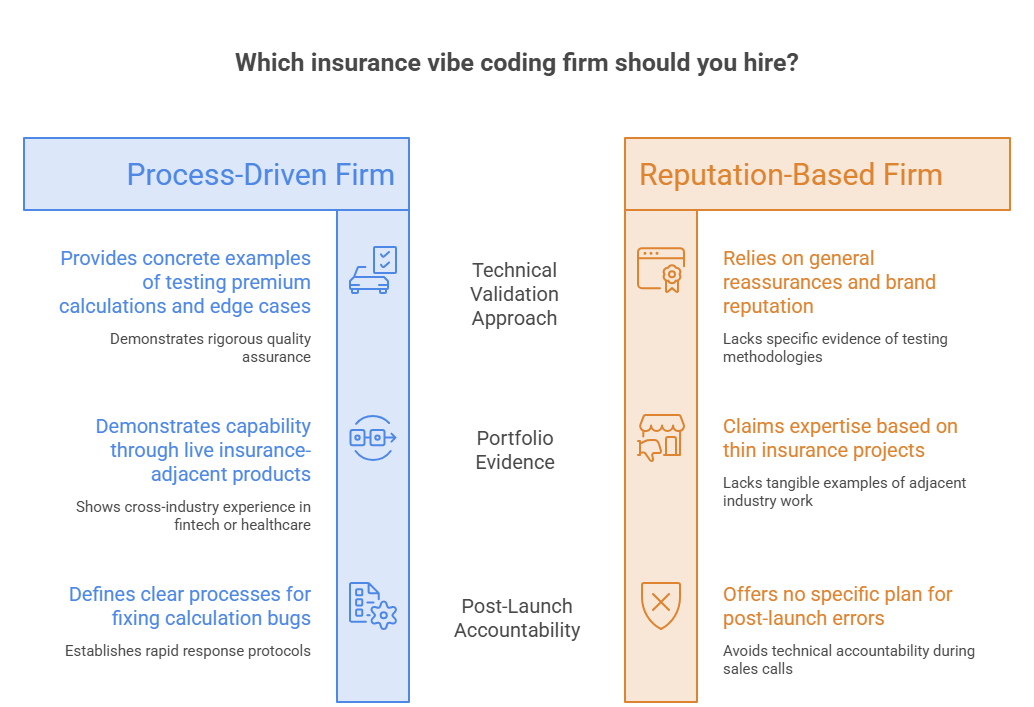
- How do you test premium and quote calculations for edge cases before launch?
- Who reviews AI-generated code before it reaches production, and what do they check for?
- How do you handle sensitive documents like ID scans or medical records tied to a claim?
- Who owns the source code, infrastructure, and design files once we finish?
- What happens if a calculation bug is found after launch, and how fast is it fixed?
- Can you show me a live insurance-adjacent product, even if it's not insurance itself?
That last question matters more than it sounds. A firm with broad experience across fintech, healthcare, and ecommerce can usually show you something adjacent even without a pure insurance portfolio, and that adjacency often signals more real capability than a narrow specialist with three thin insurance projects claiming to be among the best vibe coding developers in US markets on reputation alone.
How do I select the right vibe coding agency for insurance?
Select based on how specifically a firm answers the questions above, not how confidently it speaks. Run the same list past two or three firms and compare the gaps. The agency that answers every question with a name, a process, or an example, rather than a general reassurance, is the one worth trusting with a hire vibe coding experts for insurance apps USA decision.
4. What's the smartest way to assess an insurance vibe coding firm's body of work?
Use the product yourself before you take anyone's word for it. Get a quote, upload a fake document, try to trigger an error, and see what happens. A portfolio site full of screenshots tells you what the app looked like. Using it tells you whether it actually works.
Score four things: how the quote calculation behaves with unusual inputs, how document upload handles a large or oddly formatted file, whether payment failures are handled gracefully, and how consistent the experience feels from screen to screen. Then ask what happened after launch, since every real product hits a bug eventually, and how a firm talks about that moment tells you a lot.
4.1 What reliability actually looks like
Reliable outfits show repeat clients, name the actual engineers who worked on a build, and are willing to talk through a mistake they made and fixed. They also tend to have shipped across more than one industry, which is a feature, not a gap, since it means the team has been tested against a wider range of real-world edge cases than an insurance-only shop ever sees. That is precisely the profile you want when comparing USA insurance app development experts, rather than a firm whose entire pitch rests on the word "insurance" appearing on its homepage.
5. What should you watch for in an insurance vibe coding agency?
Watch for vagueness dressed up as confidence. If an agency cannot explain how it tests calculations or who reviews AI-generated code, assume the same fog covers everything else.
Specific red flags to note:
- A launch date promised before any real scoping has happened
- A price dramatically lower than every other quote you've received
- No answer on how sensitive documents or personal data are stored
- Reluctance to hand over code ownership or hosting access
- Pressure to sign quickly for a discount that vanishes tomorrow
- A portfolio that only shows design mockups, never a working product
What should a good insurance vibe coding pitch include?
It should include a clear feature list tied to milestones, named team members, a testing plan for the calculation logic specifically, and pricing broken into phases. A pitch that treats testing as an afterthought, buried in a single line item, is telling you how it treats testing in practice too.
How does outfit communication affect insurance project success?
More than most founders expect. Insurance builds involve constant small decisions about edge cases, and a slow-communicating outfit turns every one of those decisions into a delay. Look for weekly demos, a shared task board, and a named contact who answers questions directly instead of routing everything through a project manager who has to go check.
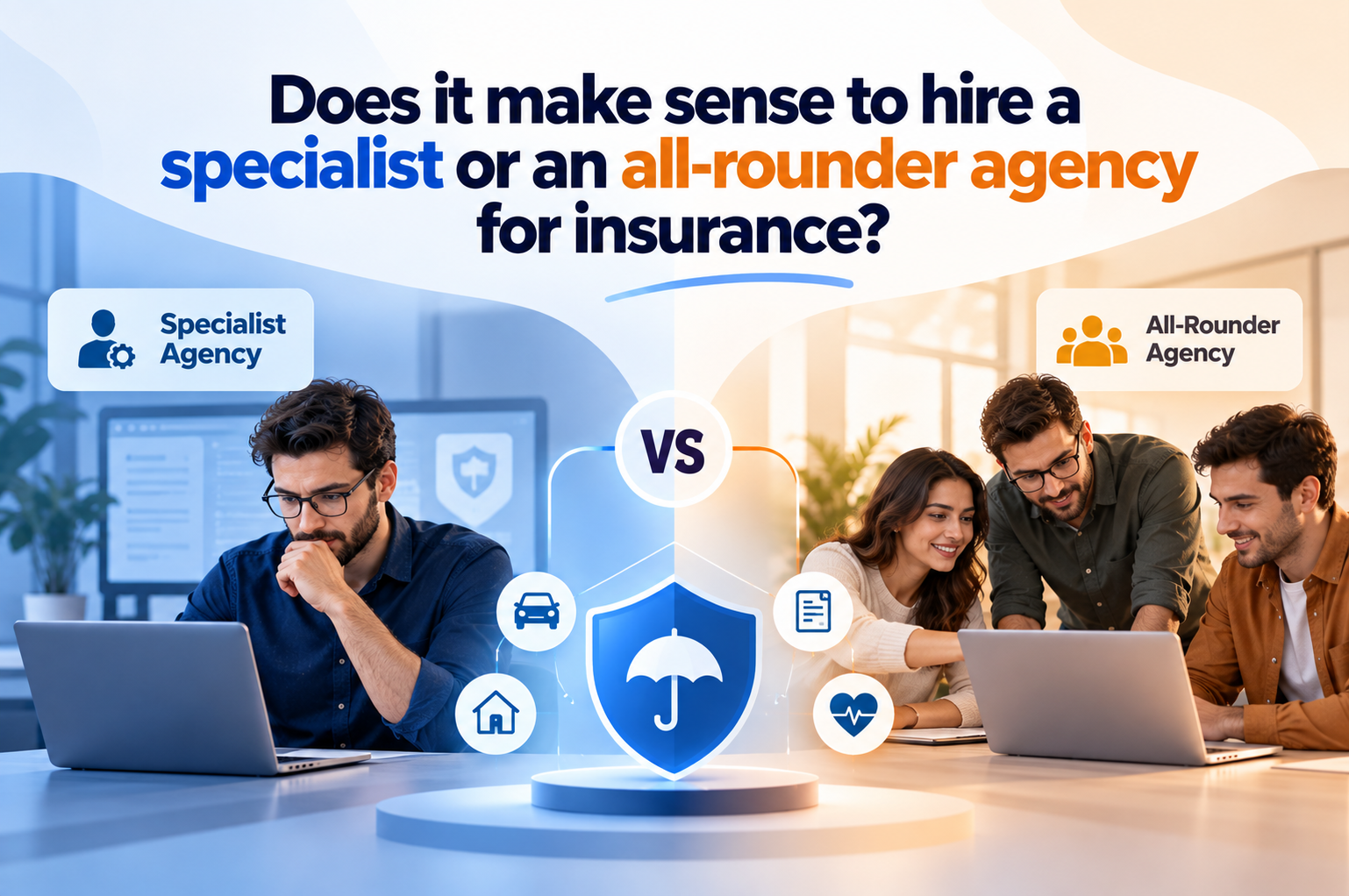
6. Does it make sense to hire a specialist or an all-rounder agency for insurance?
Here's the part where the specialist crowd expects you to nod along, and where it's worth pushing back a little. A firm that has only ever built insurance software has seen insurance problems. A genuinely strong all-rounder firm has seen the same underlying risks, money handling, sensitive data, regulatory scrutiny, across insurance, fintech, healthcare, and ecommerce, which usually makes it better at spotting trouble before it ships, not worse.
The real question isn't how narrow a firm's client list looks. It's whether the firm applies the same rigor to every project, insurance or otherwise. A firm offering genuine best vibe coding developers in US markets should be able to show that consistency across a varied body of work, which is a stronger signal than a single-industry résumé padded to look impressive.
6.1 In-house crew or agency for insurance vibe coding in the US?
An in-house team gives you long-term control, but hiring senior developers with the right mix of skills takes months and an ongoing salary commitment. An agency gives you speed and a ready team without that overhead. Many insurance startups launch with a hire vibe coding experts for insurance apps USA partnership, then bring on a small in-house team later once the product has settled and documentation is in good shape. ArixLabs supports that path with maintainable code and clear handover notes, so the transition doesn't mean starting over.
7. What should an insurance vibe coding agency generally charge?
Price tracks scope and calculation complexity more than anything else, so treat a flat number offered before scoping as a guess, not a quote. A basic quote generator costs a fraction of a full policy management system with claims, document handling, and multi-state compliance logic.
Agencies typically price one of three ways: fixed price for a clearly defined scope, time and materials for evolving requirements, or a monthly retainer for ongoing work. Vibe coding tends to shorten the time spent on first drafts of screens and standard flows, which can lower overall cost, but testing the actual calculation logic should never be the corner anyone cuts.
Ask every firm you're considering, whether or not they market themselves among the USA insurance app development experts, to break its quote down by feature, so you can see what the calculation and compliance work costs separately from the interface work. ArixLabs prices in phases tied to specific deliverables, which is the kind of clarity that separates a trustworthy partner from a firm hoping you won't ask too many questions.
Conclusion
Choosing the right team for an insurance app is less about finding someone who has only ever done insurance, and more about finding someone who treats every number, every document, and every edge case with the seriousness your policyholders expect. Ask sharp questions, test the actual product, and favour the firm that shows its work rather than just its confidence. Whether you frame the search as wanting to hire vibe coding experts for insurance apps USA carriers rely on, finding the best vibe coding developers in US markets, or simply comparing USA insurance app development experts side by side, ArixLabs builds that way by habit, not as a pitch, and that habit is worth checking for yourself.
FAQ
1. How do I select the right vibe coding agency for insurance?
Shortlist agencies with checkable proof, ask each one the same set of process questions, and compare their answers side by side. Pick the one that answers with specifics, not confidence alone.
2. What makes a firm good at insurance vibe coding?
A disciplined testing process for calculation logic, human review of every AI-generated feature that touches money or data, and enough breadth from other industries to spot risks an insurance-only shop might miss.
3. Should an insurance vibe coding outfit have industry experience?
It helps, but broad experience across regulated or sensitive industries, fintech, healthcare, ecommerce, often matters more than insurance experience alone, since the underlying risks overlap heavily.
4. How much time does it take to onboard an insurance vibe coding outfit?
Usually one to two weeks for access, scoping, and planning, a little longer if the product involves multi-state compliance considerations that need mapping out early.
%20(1).jpg)

View more blogs
.png)


.png)
.png)
.png)
Ready to develop your own product? Get in touch today!
Get in Touch