


.png)


1. Introduction
Vibe coding has changed how quickly founders in Sydney, Melbourne, or Perth can turn an idea into a working application. But while AI has accelerated development, it hasn't made software pricing any simpler. Anyone evaluating vibe coding costs in Australia needs to understand what actually drives the final budget—not just the headline rate quoted by a development agency.
This guide breaks down the cost of building an app with vibe coding in Australia, the factors that increase or reduce pricing, and how AI-assisted development compares with traditional software development. Whether you're planning an MVP or a production-ready platform, understanding these cost drivers will help you budget more accurately.
One reason pricing varies so much is that not every team uses vibe coding the same way. Experienced AI development agencies, including Arixlabs, combine AI-assisted workflows with established engineering practices to build production-ready applications rather than simple prototypes. That practical experience offers valuable insight into where projects typically overspend, which costs are unavoidable, and how businesses can use AI to reduce development time without compromising quality. Throughout this guide, we'll explore those factors so you can make an informed investment decision.
2. What You'll Really Pay for a Vibe Coding Build in Australia
When you're shipping from Australia, what does vibe coding cost?
For most teams beyond a simple, vibe coding cost in the Australia lands between AU$3,000 and AU$25,000 for an MVP, depending on scope, complexity, and how much AI tool-assisted development is layered with human review. The cost to vibe code an app in the Australia shifts fast once you add integrations, custom UI, or backend logic prototype. Budgets here are rarely fixed line items. They flex around three things: how clear your spec is, how many revision cycles you need, and whether you're paying for a freelancer, a studio, or an in-house build.
Here's what actually shapes your number:
- Build complexity (simple app vs multi-feature product)
- Tooling and AI credits used during development
- Design polish and custom components
- Post-launch support built into the quote
What we cover in this guide:
- What actually drives vibe coding pricing
- How it compares to traditional development cost
- What a realistic startup budget looks like
- Where hidden costs sneak in
- How to cut cost without cutting quality
Arixlabs (previously FlutterFlowDevs) works from this exact vantage point, building vibe coding products for teams that want speed without losing engineering discipline. As vibe coding moves from novelty to standard practice, the teams getting real value are pairing it with proper AI app architecture, not just prompting a tool and shipping whatever comes out. That distinction matters more than most vibe coding cost guides let on, and it's the lens this guide uses throughout.
3. When you're shipping from Australia, which factors drive vibe coding job pricing?
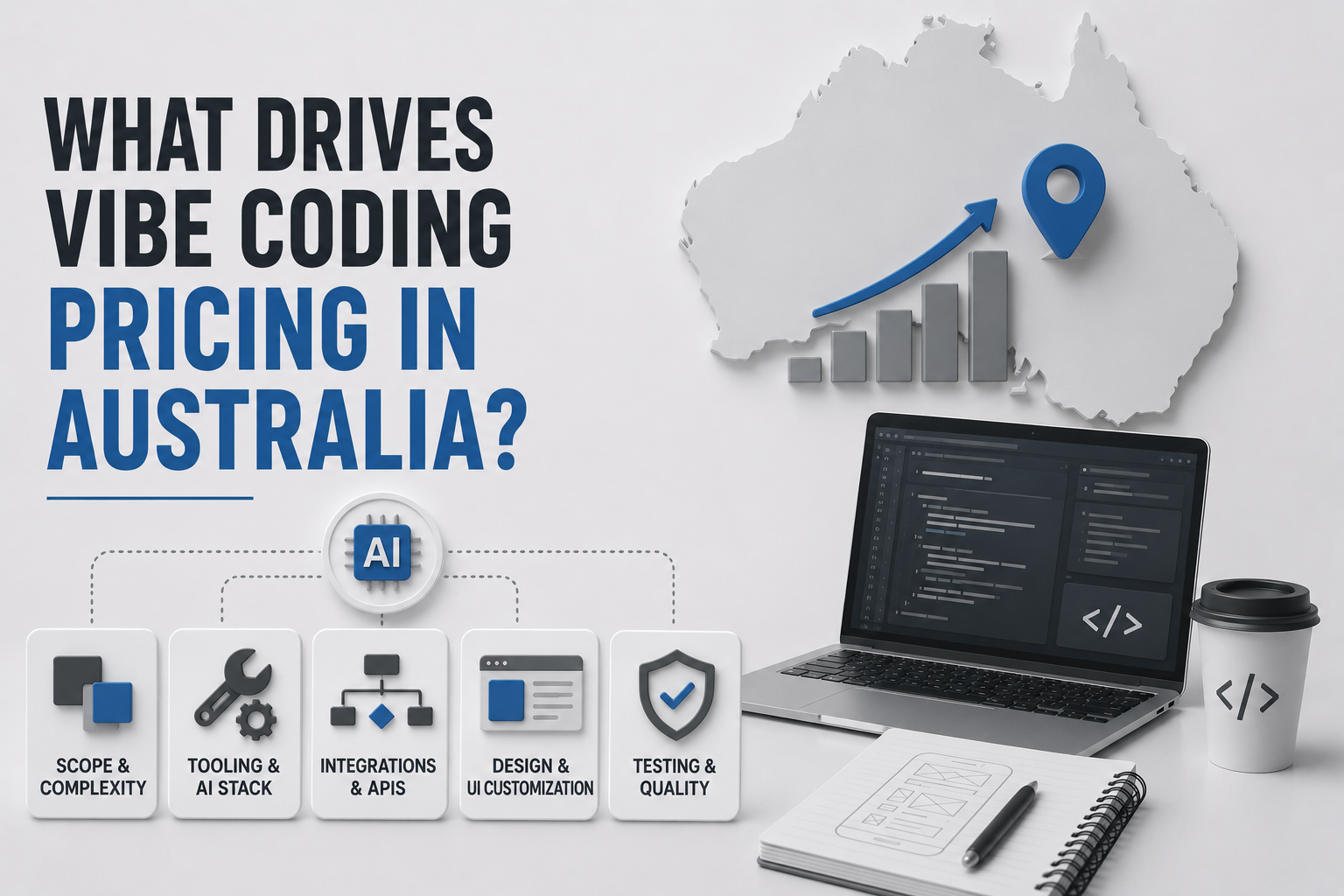
Vibe coding costs in Australia are influenced by five primary factors: project scope, tooling, revision volume, integration complexity, and the experience of the team guiding the AI-assisted development process. A simple single-screen prototype costs far less than a multi-user application with authentication, payments, and a custom backend. As requirements become more complex, the cost of a vibe coding project increases because more engineering review, testing, and refinement are required.
Does the tool stack affect pricing? Yes. Different vibe coding platforms and AI development tools have varying licensing costs and produce different levels of code quality. Teams using more advanced tools may charge higher rates, but they often spend less time fixing bugs and refining generated code, reducing the overall cost of the project.
- Number of screens and user flows
- Third-party integrations (payments, authentication, APIs)
- Custom design versus template-based UI
- Data model and business logic complexity
- Testing, code review, and quality assurance requirements
Experienced vibe coding agencies, such as ArixLabs, often quote slightly higher upfront because they include structured engineering review, testing, and scalable architecture as part of the development process. While that can increase the initial estimate, it typically reduces costly rework and maintenance after launch, leading to better long-term value.
4. How does vibe coding cost size up to traditional development, if you're shipping from Australia?
Vibe coding cost vs traditional development cost in the Australia usually favors vibe coding by 40-60% for early-stage builds, but that gap narrows as complexity rises. Traditional development bills for architecture planning, manual coding, and QA cycles that vibe coding compresses using AI-assisted generation. For a simple MVP, that compression saves real money.
Where does traditional development still win?
For apps needing deep custom logic, regulatory compliance, or heavy data processing, traditional development often produces more stable output per dollar spent long-term. Vibe coding shines on speed to first version; traditional development shines on systems meant to scale without a rebuild.
- Vibe coding: faster first version, lower upfront cost
- Traditional development: steadier scaling, higher initial spend
- Vibe coding: best for MVPs and internal tools
- Traditional development: best for regulated or high-complexity products
Should you hire FlutterFlow developers?
No, that's a separate no-code path entirely, and the pricing question here is specifically about AI-driven vibe coding tools, not visual builders. Keeping that distinction clear avoids comparing two very different cost structures.
5. What counts as a reasonable vibe coding budget for a startup, if you're shipping from Australia?
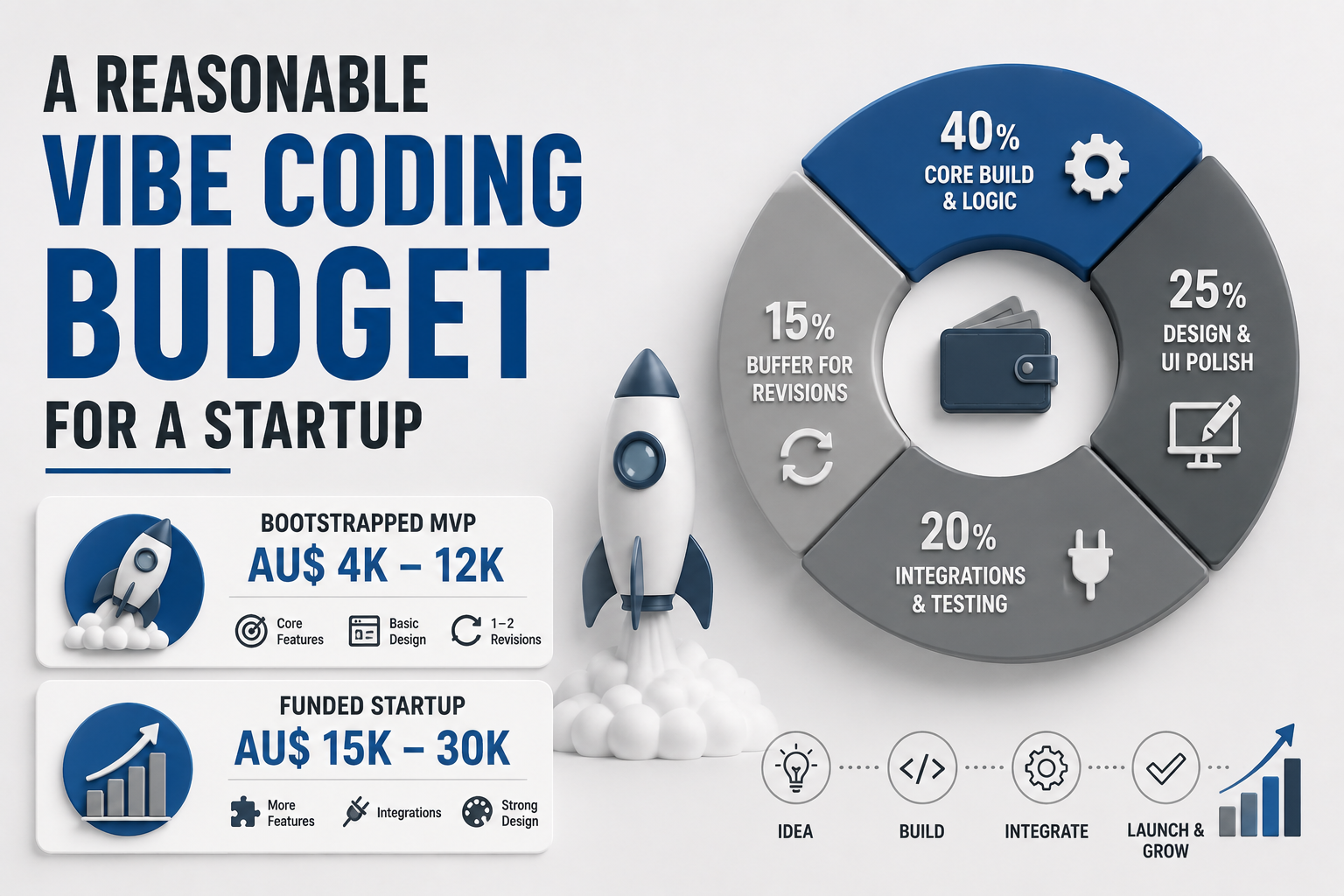
Vibe coding costs in Australia for a bootstrapped startup MVP typically range from AU$4,000 to AU$12,000. This usually covers core functionality, a basic user interface, and one or two rounds of revisions. For funded startups building more feature-rich applications, costs generally range from AU$15,000 to AU$30,000, reflecting additional integrations, custom functionality, and more comprehensive design and testing.
Is there a minimum viable budget? Yes. Most experienced vibe coding agencies won't quote less than AU$3,000 for anything beyond a simple proof of concept, as even AI-assisted development requires project setup, engineering review, testing, and quality assurance.
A typical budget is often allocated as follows:
- 40% – Core application development and business logic
- 25% – UI design and user experience refinement
- 20% – Integrations, testing, and quality assurance
- 15% – Contingency for revisions and scope adjustments
We've found that successful vibe coding projects follow a similar distribution. Investing sufficient time in planning, engineering review, and testing early in the process helps reduce rework later, resulting in more predictable budgets and a smoother path from MVP to production.
6. Do you get hidden costs in vibe coding jobs, if you're shipping from Australia?
Vibe coding cost in the Australia often excludes items buyers assume are included. Hidden costs typically show up in hosting, API usage fees, third-party licensing, and post-launch bug fixes that fall outside the original scope. The cost to vibe code an app in the Australia on paper rarely reflects the true 90-day cost once these extras are added.
What's the most commonly missed cost? Ongoing AI tool credits. Many quotes cover the build phase but not the recurring cost of the AI platform itself once the app is live and being iterated on.
Common hidden costs include:
- Hosting and server fees
- Third-party API and license fees
- Post-launch bug fixes outside original scope
- Design revision rounds beyond the agreed limit
- AI credit consumption after handover
Ask for a written scope document before signing anything. A clear scope is the single biggest protection against surprise invoices in vibe coding work.
7. How do firms price vibe coding work, if you're shipping from Australia?
Vibe coding cost vs traditional development cost in the Australia also comes down to how a firm structures its pricing model. Most Australian providers use one of three models: fixed-price per project, hourly billing, or milestone-based payments tied to deliverables.
Which pricing model is most common?
Milestone-based pricing is increasingly standard, since it protects both sides, the client pays as work is delivered, and the provider gets paid without waiting for full project completion.
- Fixed-price: best for clearly scoped, simple builds
- Hourly: best for evolving or exploratory projects
- Milestone-based: best for mid-size builds with defined phases
Firms building vibe coding products, including Arixlabs, generally lean toward milestone pricing, because integration work often reveals scope changes mid-build that a rigid fixed price can't absorb fairly for either side.
8. When you're shipping from Australia, what's the way to you reduce vibe coding costs without cutting corners?
Cost to vibe code an app in the Australia can be reduced significantly through smart scoping rather than cheaper labor. The biggest lever is a tight, well-documented spec before development starts, since ambiguity is what drives revision costs up.
Does starting with a smaller MVP save money?
Yes, launching a lean version first and expanding based on real user feedback avoids paying for features that may not be needed at all.
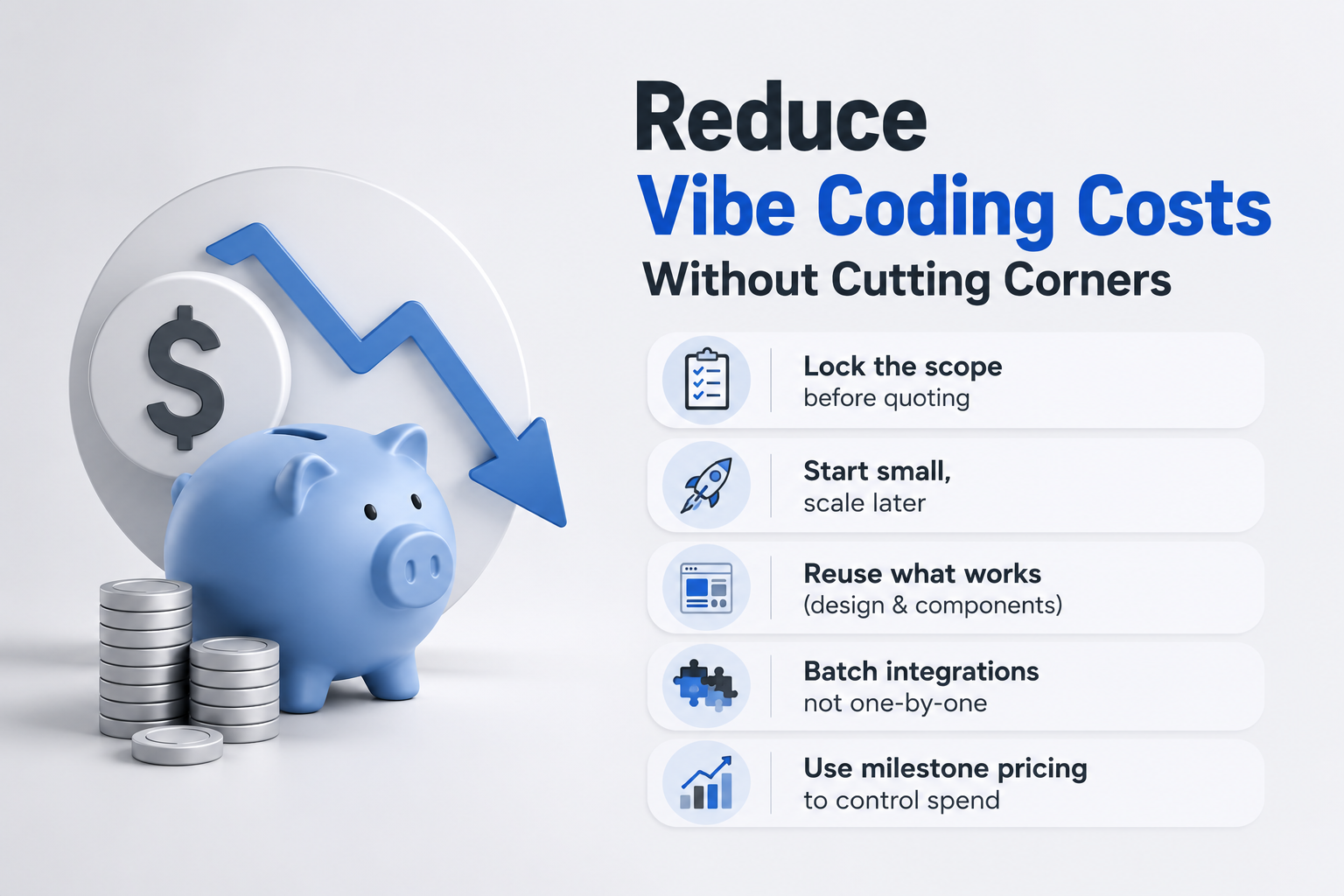
Practical ways to cut cost:
- Lock the scope in writing before quoting
- Launch a minimal version, expand later
- Reuse existing design systems where possible
- Batch integrations instead of adding them one at a time
- Choose milestone pricing to control spend per phase
None of these compromise quality. They simply remove the guesswork that inflates vibe coding cost in the Australia budgets.
9. When you're shipping from Australia, fixed price vs hourly vibe coding pricing
Vibe coding cost in the Australia under a fixed-price model gives budget certainty but less flexibility if scope shifts. Hourly pricing gives flexibility but less budget predictability, which can be risky for teams without a firm cap in mind.
Which model should a first-time buyer choose?
Fixed-price is usually safer for first-time buyers, since it forces the provider to define scope clearly upfront and removes the risk of open-ended billing.
MVP cost vs full-product vibe coding cost, if you're shipping from Australia
- MVP builds: AU$4,000-AU$12,000, single core flow, minimal integrations
- Full-product builds: AU$18,000-AU$35,000+, multiple flows, deeper integrations, polished UI
Ongoing costs after a vibe-coded launch in Australia
- Hosting: typically AU$20-AU$150/month depending on scale
- AI tool subscriptions: usually AU$20-AU$200/month
- Maintenance and bug fixes: often quoted as a monthly retainer
- Feature additions: priced per sprint or per feature
Cost differences: in-house vs outsourced vibe coding, if you're shipping from Australia
- In-house: higher fixed cost, full control, slower to scale up or down
- Outsourced: lower upfront cost, faster access to specialised skill, less day-to-day control
10. FAQs
1. When you're shipping from Australia, what's the average cost of a vibe coding project?
Most projects fall between AU$4,000 and AU$25,000 depending on complexity, integrations, and design depth.
2. Is vibe coding cheaper than traditional development, if you're shipping from Australia?
Generally yes for early-stage builds, saving 40-60% upfront, though the gap narrows for complex, highly custom products.
3. What drives the price difference between vibe coding providers, if you're shipping from Australia?
Tooling quality, pricing model, and how much post-launch support is bundled into the quote are the main drivers.
4. What ongoing costs come after a vibe-coded ship, if you're shipping from Australia? Hosting, AI tool subscriptions, and maintenance retainers are the three recurring costs most teams underestimate.
%20(1).jpg)

View more blogs
.png)
.png)

.png)

.png)
.png)
Ready to develop your own product? Get in touch today!
Get in Touch