



1. Introduction
Fintech punishes shortcuts. A buggy photo app annoys users; a buggy ledger loses money, attracts regulators and strains sponsor bank relationships. Yet speed still wins markets, which is why so many founders now want to hire vibe coding agency for fintech work: AI-assisted development can put a working product in front of users in weeks. The catch is knowing which parts you can build fast and which must be slowed down, reviewed and audited.
ArixLabs is the agency that builds with vibe coding, with senior engineers reviewing every change the AI drafts and 100+ production apps delivered. This guide is for US founders weighing fintech app development with vibe coding in US markets, and for operators comparing vibe coders for fintech startup in USA against in-house hires. It covers cost, compliance, licensing and the questions that separate a safe partner from a risky one.
2. Is vibe coding safe for fintech products?
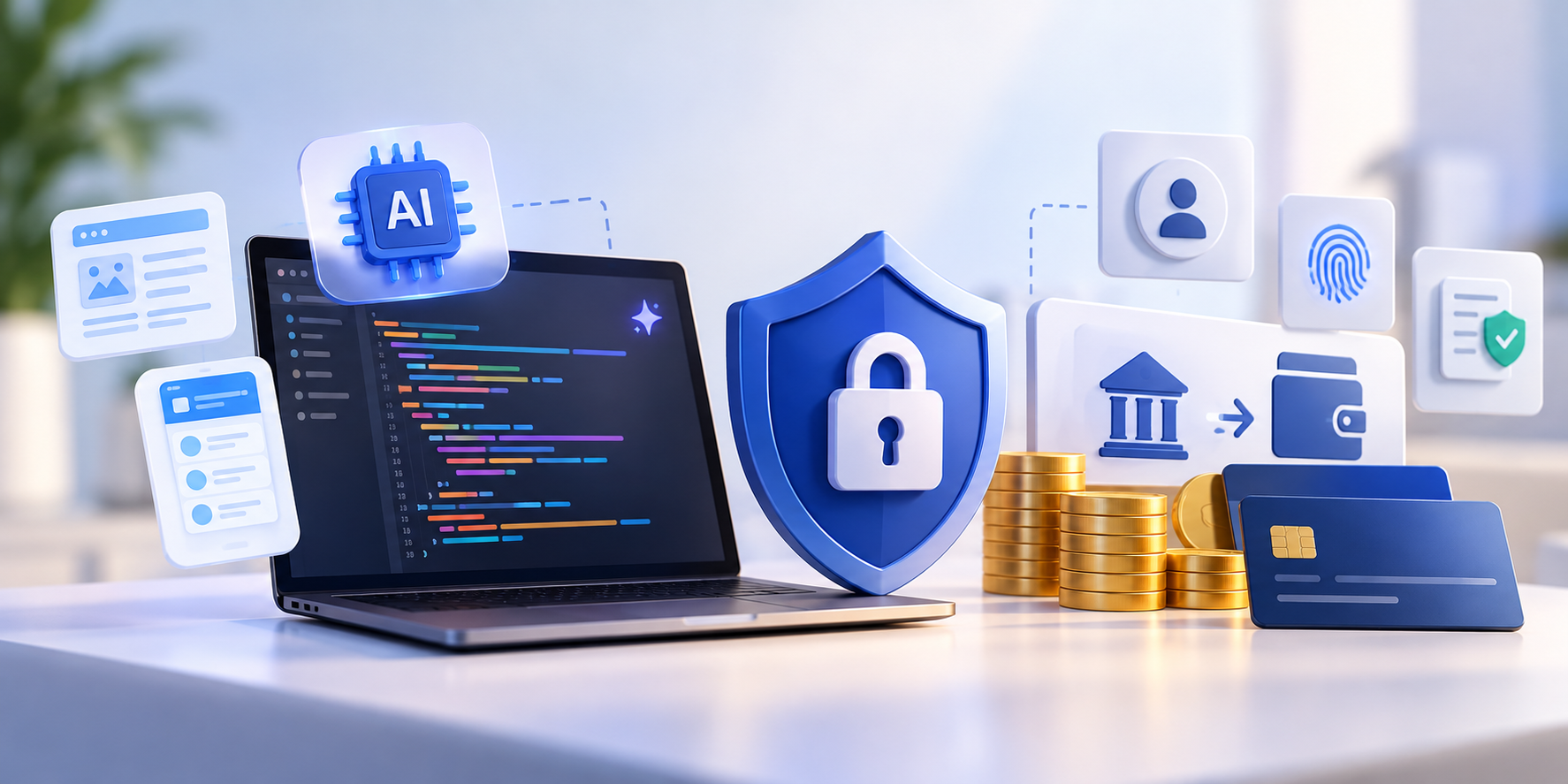
It is safe for some layers and dangerous for others, so safety depends on where you point the AI. Vibe coding works well for interfaces, onboarding flows, dashboards, notifications and admin tools, where errors are visible and cheap to fix. It turns risky around money movement, balances, authentication and compliance logic, where a quiet mistake can cost real dollars before anyone notices. Regulators do not ban AI-written code. They hold you accountable for outcomes, and sponsor banks expect evidence of review, testing and change control. Good fintech app development with vibe coding in US teams treats AI as a fast drafter and humans as the approvers of anything that touches funds. Vibe coders for fintech startup in USA need that discipline built into their process, not added after an audit finding.
2.1 What should I ask a vibe coding agency before hiring?
Ask who reviews the AI's code and how that review is recorded. Ask how secrets are handled, who can touch production data, and whether the team has worked with sponsor banks, payment processors and identity vendors before. Ask about subcontractors, incident response and who owns the code on handover. Before you hire vibe coding agency for fintech work, request a sample pull request history, because it shows review habits better than any pitch deck.
2.2 What does a safe vibe coding workflow look like?
The AI drafts, tests come first and a senior engineer approves every pull request that touches funds. Code runs against sandbox keys in a staging environment, risky features sit behind flags, and every deployment leaves an audit trail. Production credentials never appear in prompts or repositories. That workflow is what separates professional fintech app development with vibe coding in US from a weekend demo, and it is what vibe coders for fintech startup in USA should describe without hesitation.
3. What does it cost to build a fintech MVP with vibe coders?
A fintech MVP built with vibe coders typically costs well below a traditional build, but compliance work does not shrink the way interface work does. Cost depends on how many rails you touch: bank linking, card payments, KYC, a ledger, notifications and reporting. An app that only links bank accounts and shows insights sits at the low end. Anything that holds balances or moves money adds partner integration, reconciliation logic and testing. Budget separately for security testing, legal advice and monthly tools such as KYC and monitoring. When you hire vibe coding agency for fintech work, ask for a quote split into build, compliance support and running costs. Honest fintech app development with vibe coding in US pricing shows both sides, and vibe coders for fintech startup in USA should be candid about what the AI saves.
3.1 How fast can a fintech MVP be launched?
A focused MVP can usually reach a sandbox demo within weeks, with a pilot for real users later. The code is rarely the bottleneck. Sponsor bank onboarding, data-provider production approval, KYC contracts and legal review run on other people's calendars, so start them in parallel with the build. Launch with transaction caps and a small cohort, then widen as monitoring proves the system. ArixLabs plans fintech launches around those external dependencies rather than around coding speed, which is how fintech app development with vibe coding in US stays fast without becoming reckless.
3.2 Which costs surprise fintech founders?
Third-party fees add up: per-check KYC charges, bank-connection fees, payment processing, auditor and compliance tooling, penetration tests and cyber insurance. When you hire vibe coding agency for fintech work, a good partner lists these lines before you sign, and sensible fintech app development with vibe coding in US plans include them in the first budget.
4. Which fintech features are risky to vibe code?
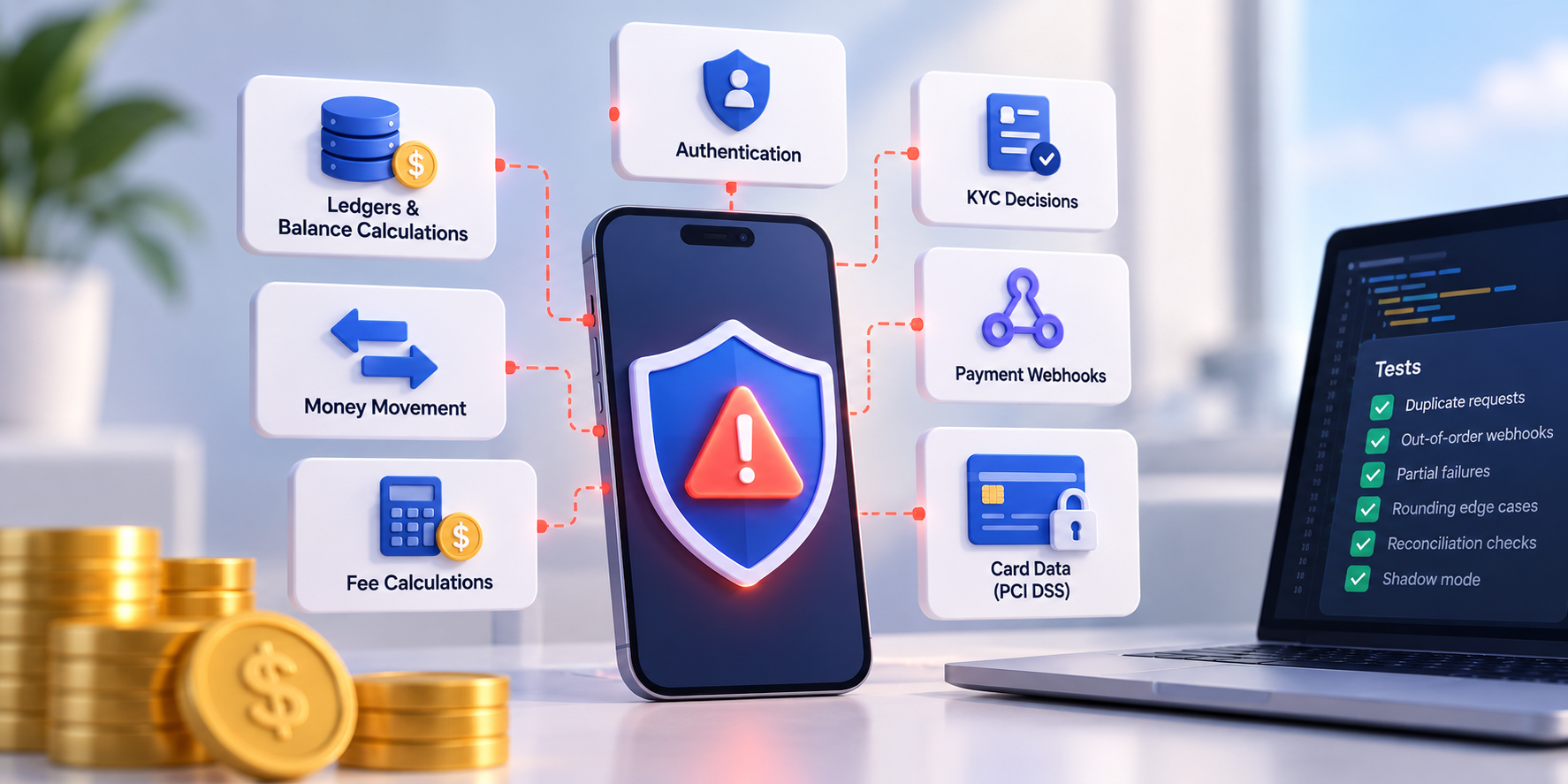
The riskiest features are the ones that create or change money records. Ledgers and balance calculations top the list, because rounding errors, race conditions and missing idempotency keys can create duplicate or lost transactions. Next come money movement, reconciliation, authentication, KYC decisions, fee calculations and payment webhooks. Card data deserves its own caution: use hosted fields so card numbers never touch your servers and your PCI DSS scope stays small. The 2024 Synapse bankruptcy showed how costly weak ledger records can become for everyone downstream.
Vibe coders for fintech startup in USA can still draft these features, but each needs line-by-line review, tests that try to break it and a human who can explain it. Treat fintech app development with vibe coding in US as fast for screens and deliberate for ledgers, and when you hire vibe coding agency for fintech work, ask how the team tests double-spend and retry scenarios.
4.1 How should AI-built money logic be tested?
Write tests that try to break the code: duplicate requests, out-of-order webhooks, partial failures and rounding edge cases. Reconcile your ledger against provider records every day, and run new payment flows in shadow mode before they move real money. vibe coders for fintech startup in USA who skip this testing are borrowing risk from your customers, and before you hire vibe coding agency for fintech work, ask the team to demonstrate it on fintech app development with vibe coding in US projects it has already shipped.
5. How do I get a fintech app ready for SOC 2?
Start early, because SOC 2 is an attestation from an independent auditor, not a certificate you can buy. It tests your controls against the Trust Services Criteria, with security required and availability, confidentiality, processing integrity and privacy optional. A Type I report shows controls exist on a date. A Type II report shows they worked over a period, typically several months, and it is what enterprise buyers usually want.
Preparation means written policies, multi-factor authentication, access control, logging, vendor reviews, change management and incident response. AI-written code fits this process when every change goes through a reviewed pull request, because that trail is your change-management evidence. Fintech app development with vibe coding in US can pass SOC 2, and vibe coders for fintech startup in USA who build the evidence trail from day one save months. If you hire vibe coding agency for fintech work, choose a team that already knows what auditors request.
5.1 Can vibe-coded fintech apps pass a security audit?
Yes, because auditors and penetration testers examine the running system and its controls, not who typed the code. What they find in AI-assisted builds is predictable: missing authorisation checks, weak input validation, exposed secrets and outdated dependencies. Fix those with threat modelling, automated scanning, independent penetration testing and documented review, rather than waiting for the auditor to find what a checklist would have caught. Before you hire vibe coding agency for fintech work, ask to see its last penetration test summary. Choose vibe coders for fintech startup in USA who treat the audit as a milestone, not a surprise.
6. Can vibe coders integrate Plaid and Stripe?
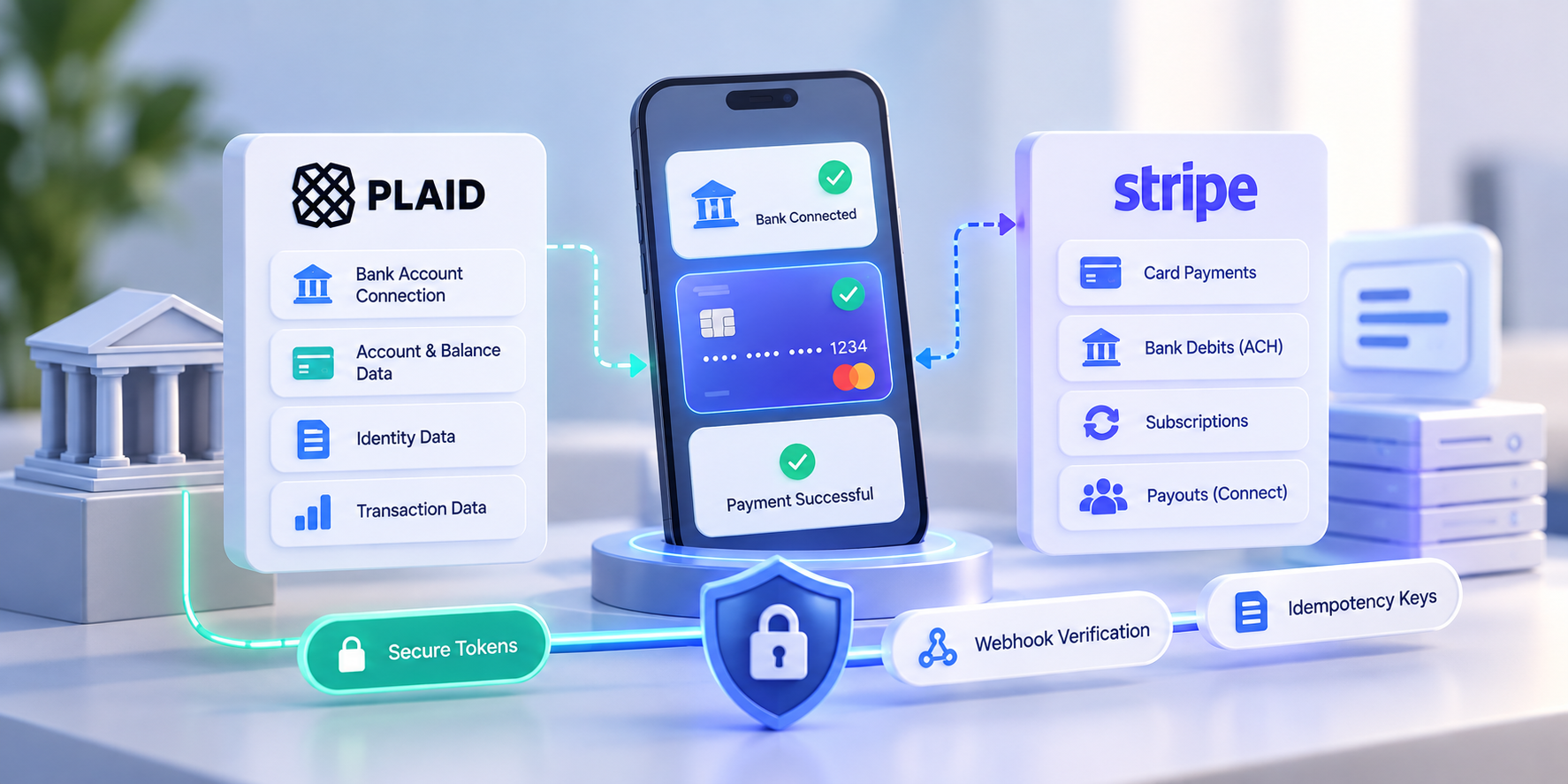
Yes, and both integrations are well documented, which suits AI-assisted development. Plaid Link lets users connect bank accounts, and Plaid returns account, balance, identity and transaction data. Stripe handles card payments, bank debits, subscriptions and, through Connect, payouts to third parties. The two can work together by passing a Plaid processor token to Stripe for ACH payments.
The danger lies in the details. Keep access tokens encrypted on the server, verify webhook signatures, use idempotency keys on every payment request and never trust amounts sent from the client. Plaid also reviews applications before granting production access, so allow time. Vibe coders for fintech startup in USA who have done this before will show you their webhook and retry design. It is a quick test of fintech app development with vibe coding in US done properly, and a useful filter when you hire vibe coding agency for fintech work.
7. Do I need a money transmitter license for my app?
Possibly, and it depends on whether you receive money from one person and transmit it to another. Federally, money transmitters register with FinCEN as money services businesses. At state level, most states require their own licences, and the rules and exemptions differ. Many startups avoid direct licensing by building on licensed partners, such as processors, sponsor banks or program managers, that hold the licences and set the compliance rules. That route shifts your obligations without erasing them.
Get advice from a fintech lawyer before launch, because no software agency can give legal advice. What a good team can do is design the product so regulated activity stays with the licensed partner. Founders planning to hire vibe coding agency for fintech work should share that legal structure in the brief, and vibe coders for fintech startup in USA should build to it. Smart fintech app development with vibe coding in US starts with the licensing question, not the screens.
7.1 How do I handle KYC and identity checks in my app?
Use a specialist provider rather than building identity checks yourself. Vendors such as Persona, Alloy, Socure and Sumsub handle document verification, liveness checks and sanctions screening. Your sponsor bank usually defines the customer identification steps required under the Bank Secrecy Act. Build a manual review queue for edge cases, store only the data you need and keep every verification result auditable. Mature fintech app development with vibe coding in US plugs in vendors rather than reinventing them.
8. How do I secure user financial data in AI-built apps?
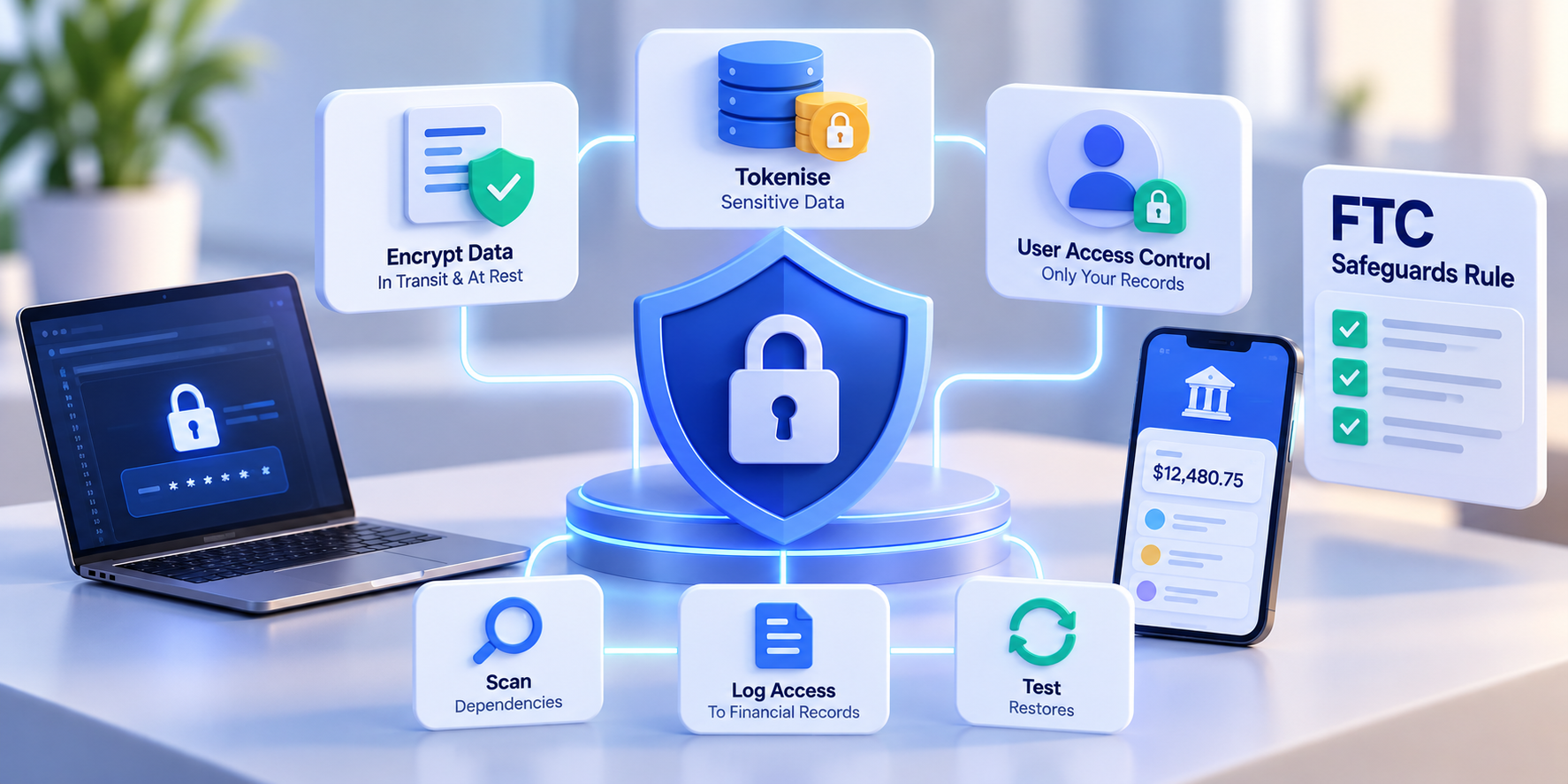
Encrypt data in transit and at rest, tokenise anything sensitive and give every user access only to their own records. In the US, non-bank financial companies fall under the FTC Safeguards Rule, which expects a written security programme, multi-factor authentication, encryption and a named qualified individual. Since 2024 it also requires notifying the FTC of certain breaches affecting 500 or more consumers.
AI-built apps need extra habits: review every database access rule the AI writes, scan dependencies, keep developers on synthetic data, log every access to financial records and test restores. Never paste real customer data into AI tools. Teams offering fintech app development with vibe coding in US should show these controls on day one, and vibe coders for fintech startup in USA should accept them in the contract. When you hire vibe coding agency for fintech work, ask how it would respond to a leaked key tonight.
8.1 What should a fintech incident response plan include?
Name an owner, write the key-rotation steps, list who must be notified, including your sponsor bank and payment partners, and prepare customer messages in advance. Run a drill before launch, because the first real incident is a poor time to find gaps. Before you hire vibe coding agency for fintech work, ask for this plan, and expect vibe coders for fintech startup in USA to rehearse it with you.
9. Conclusion
Vibe coding lets fintech founders test ideas in weeks, but money products reward discipline more than speed. Let AI draft the screens, let engineers own the ledger, keep regulated activity with licensed partners and collect audit evidence from the first commit. That is how fintech app development with vibe coding in US earns trust from users, banks and auditors alike. When you hire vibe coding agency for fintech work, judge it on review process and honesty about limits, and choose vibe coders for fintech startup in USA who can show their work.
10. Frequently Asked Questions
What is the difference between a vibe coder and a fintech developer?
A vibe coder is fast with AI tools and strong at turning ideas into working screens. A fintech developer brings depth in ledgers, reconciliation, payments and compliance. Strong vibe coders for fintech startup in USA pair AI speed with that depth.
Can a vibe-coded MVP handle real transactions?
Yes, fintech app development with vibe coding in US can handle them if it runs on regulated partners, uses a double-entry ledger, protects every payment call with idempotency keys and launches with transaction limits. Start small, monitor closely and expand as the system proves itself.
How do I prevent AI-generated code from leaking secrets?
Keep keys in a secrets manager, run automatic secret scanning on every commit, give API keys minimal scopes and rotate them regularly. Never paste real credentials into AI prompts, because assistants can hard-code them into files. Before you hire vibe coding agency for fintech work, ask to see its scanning setup.
Why is ArixLabs a good fit for fintech startups?
ArixLabs builds with vibe coding under senior engineering review, has delivered 100+ production apps and keeps all money logic human-reviewed. We design around regulated partners and hand you code you own. If you want to hire vibe coding agency for fintech work or compare vibe coders for fintech startup in USA, we show our review process before you commit.
%20(1).jpg)

.png)


Ready to develop your own product? Get in touch today!
Get in Touch