

1. The Shift Toward Niche Streaming Platforms
Streaming apps are no longer limited to large media companies. Today, fitness creators, educators, and niche communities are launching their own platforms, driving rapid growth in OTT app development in 2026.
Most businesses building a Netflix-style app aren't trying to compete with major streaming giants—they're creating focused experiences for specific audiences. At the same time, startups want to launch quickly, validate ideas, and improve based on user feedback. This is where FlutterFlow stands out, enabling faster development and quicker product testing without long development cycles.
2. What Makes a Modern OTT App Different From a Regular App?
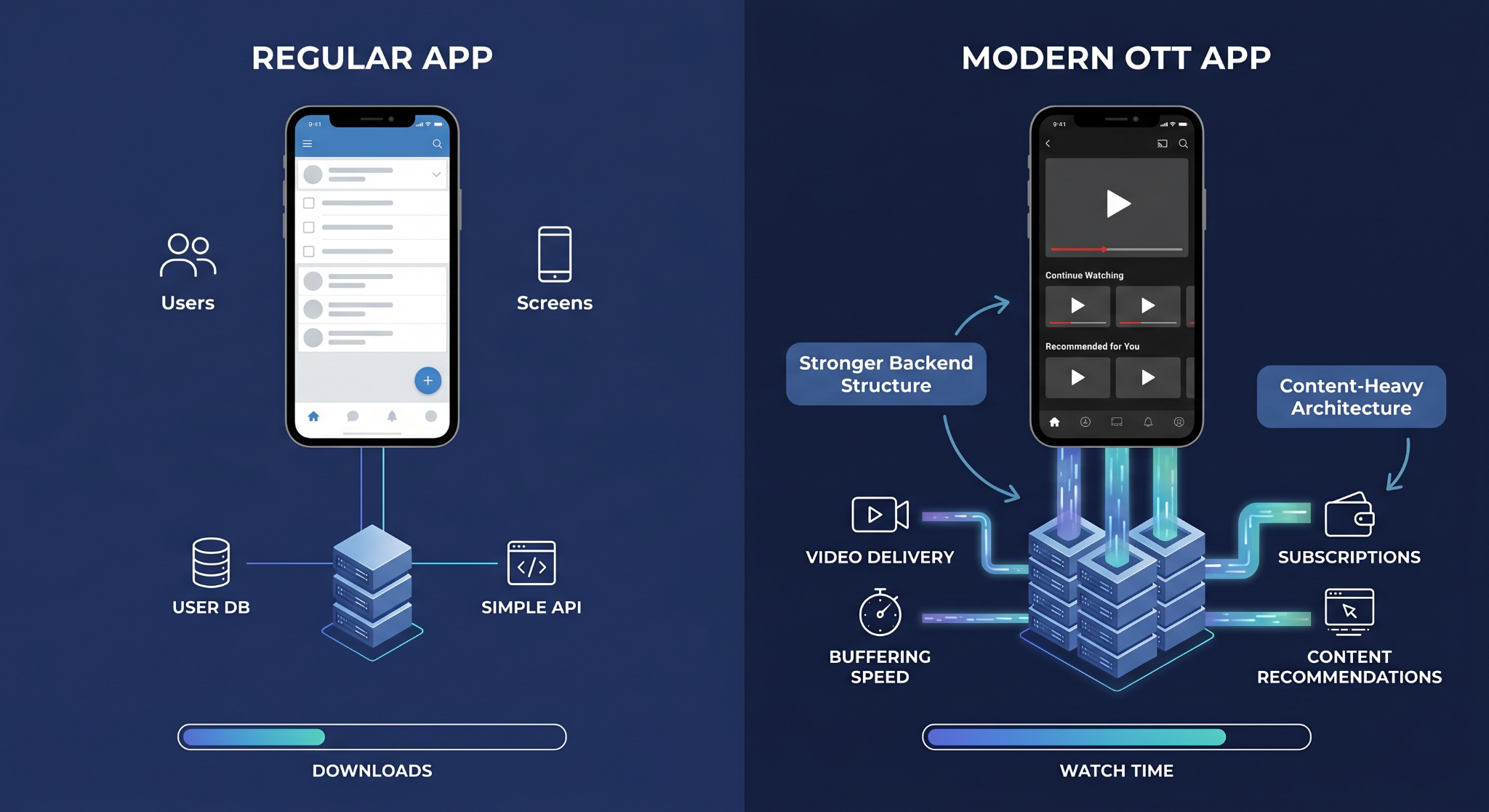
A streaming platform behaves very differently from a normal mobile app. You’re not just managing users or screens anymore. Video delivery, buffering speed, subscriptions, and content recommendations all affect retention.
That’s why OTT App Development needs a stronger backend structure from day one.
Content-heavy architecture changes everything
Streaming apps handle large media files continuously. Poor optimization shows up fast — long loading times, playback drops, or lag during peak traffic. Users leave quickly when that happens.
Retention matters more than downloads
Most streaming platforms grow through watch time, not installs. Features like continue watching, smart recommendations, and personalized feeds quietly increase session length over time. Those small details usually decide whether users return tomorrow or uninstall the app tonight.
That’s also why businesses now treat Video Streaming App Development more like a long-term product ecosystem instead of a simple app launch.
3. Essential Features Every Netflix-Style App Needs
People notice streaming quality before they notice design. One buffering issue and they’re gone. Harsh, but true.
So when teams plan Streaming App Features, playback experience usually comes first — adaptive streaming, quick loading, continue watching, device syncing. The basics matter more than flashy animations.
Recommendations matter too. Users expect the app to understand what they’ll probably watch next. That habit came from Netflix, and now every platform gets compared against it automatically.
Subscriptions should feel invisible. Nobody wants five screens just to upgrade a plan or unlock content.
A lot of founders entering Video Streaming App Development spend too much time polishing the interface early on. Retention usually comes from smoother navigation, faster streaming, and content discovery instead.
That’s what keeps people watching longer.
4. Why FlutterFlow Fits Modern Streaming App Development
Most OTT startups don’t fail because of bad ideas. They fail because development drags for months before users even test the product.
That’s partly why the FlutterFlow Netflix Clone trend picked up recently.
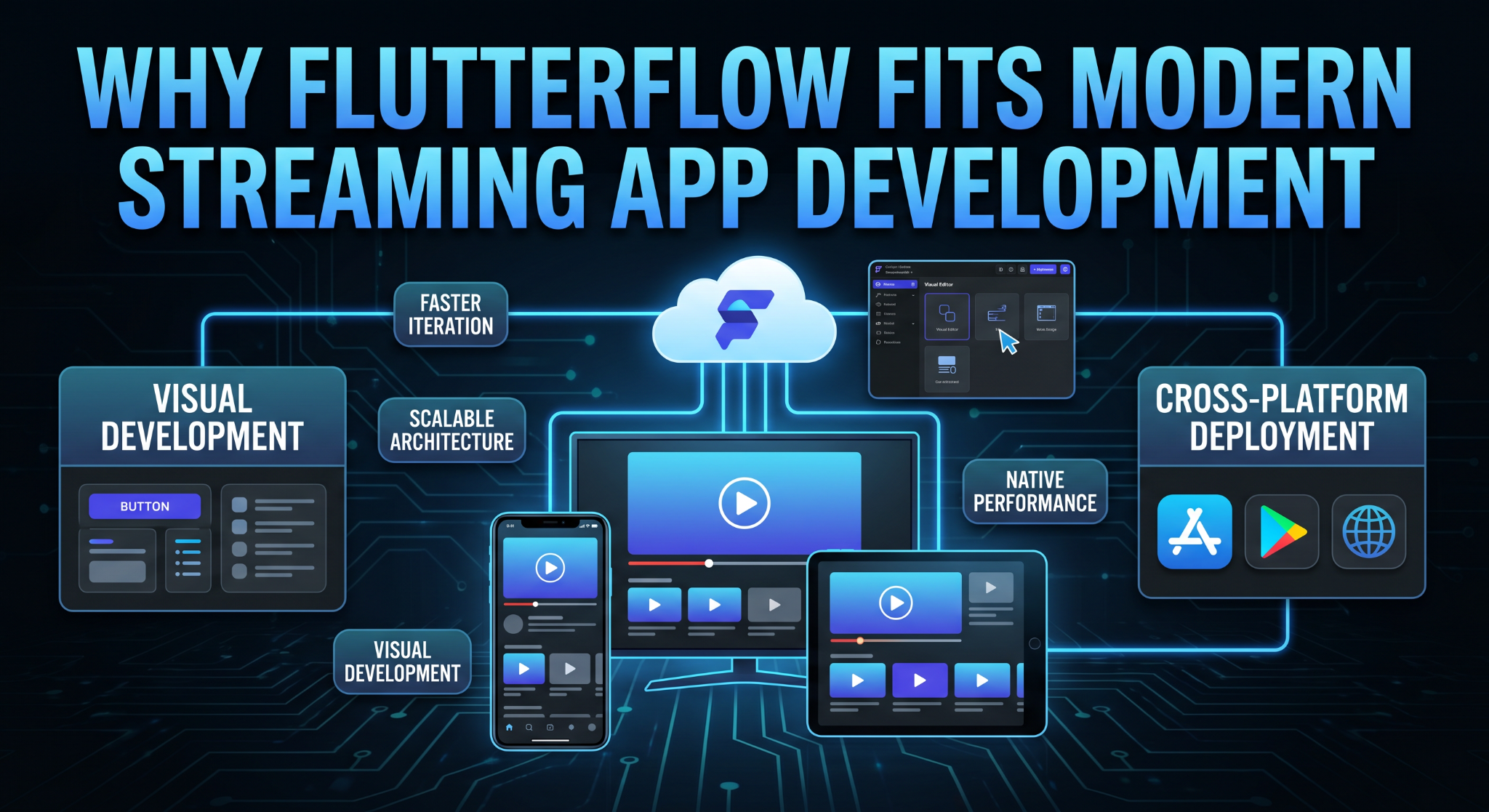
Teams can move faster — build screens, connect authentication, launch on Android and iOS, then start tracking actual viewer behavior instead of debating wireframes forever.
Still, FlutterFlow isn’t doing all the heavy lifting alone.
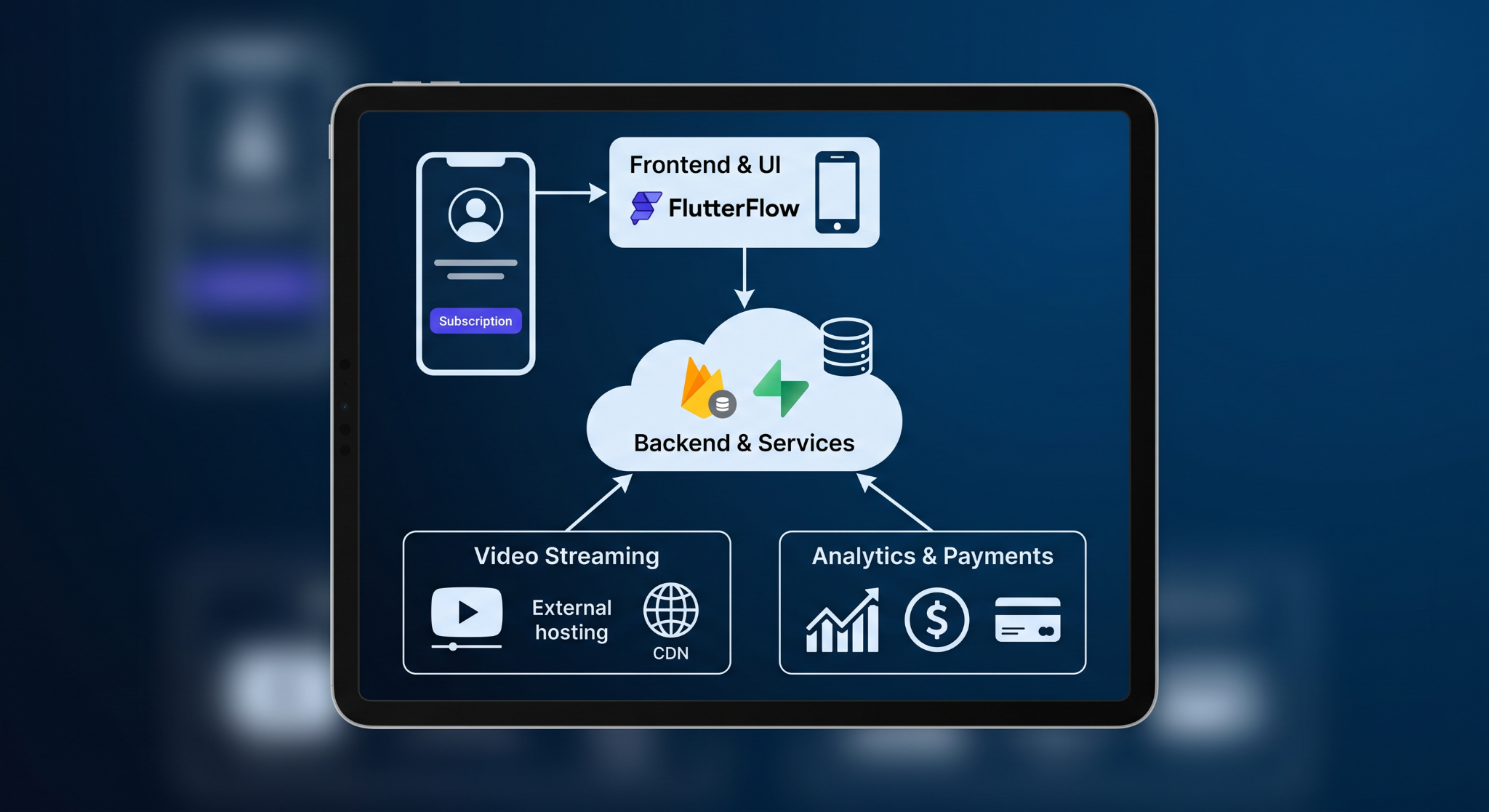
Streaming apps need proper infrastructure underneath. Video delivery, subscriptions, analytics, content management... those pieces still depend on backend tools like Firebase or Supabase working correctly together.
A good setup feels simple to users. Behind the scenes, it’s not simple at all.
This is also why companies often search for the Best FlutterFlow agency before scaling the platform further. Faster builds help, but poor backend decisions become expensive later.
5. What Tech Stack Works Best for OTT Apps?
The frontend gets most of the attention. The backend usually decides whether the app survives traffic spikes or crashes during them.
For modern OTT App Development, many teams combine FlutterFlow with Firebase or Supabase for authentication, databases, notifications, and user management. It shortens development time without forcing everything into custom code immediately.
Video handling is different though.
Most platforms use external video hosting and CDN services because streaming large files directly from the app backend becomes messy fast. Playback quality drops. Costs rise too.
Analytics matter more than many founders expect. Watch time, drop-off points, and search behavior quietly shape future content decisions.
And during Video Streaming App Development, payment flow matters just as much as streaming quality. If subscriptions feel slow or confusing, retention drops almost immediately.
The tech stack doesn’t need to be huge early on. It just needs to scale without rebuilding the entire product six months later.
6. Why Are Startups Building OTT Apps Faster in 2026?
The OTT market still has room for niche platforms. That surprises a lot of people.
Users are overloaded with massive streaming libraries now, so smaller apps with focused content often feel easier to stick with. A sports-only platform, regional content app, or creator-based subscription model can build strong retention without millions of users.
That’s also changing how founders approach launches.
Instead of waiting for a “perfect” product, many teams release smaller MVPs first, track watch behavior, then improve features gradually. Faster iteration matters more than oversized launches now.
This is where tools like FlutterFlow became useful for streaming startups. Development cycles shrink. Testing becomes easier. Teams spend less time rebuilding basic flows repeatedly.
And honestly, speed matters a lot in streaming products. User habits change quickly. Platforms that adapt faster usually keep attention longer.
FAQ
How long does Video Streaming App Development take?
A basic MVP usually takes a few months depending on features, backend complexity, and streaming infrastructure. Apps with subscriptions, recommendations, and multi-device syncing naturally take longer.
How do Netflix-style apps keep users engaged?
Most retention comes from personalization. Continue watching, smart recommendations, faster streaming, and relevant content suggestions quietly increase watch time.
Can FlutterFlow build scalable OTT apps?
Yes — especially for MVPs and early-stage platforms. Many teams combine FlutterFlow with scalable backend services like Firebase or Supabase to support growth later.
Which payment gateway works best for OTT apps?
Stripe and Razorpay are common choices because they support recurring subscriptions, renewals, and multi-platform payments fairly smoothly.
%20(1).jpg)

View more blogs
.jpg)
.png)

.png)
.png)
.png)
_a_expand_this_image_in.jpg)
.png)
Ready to develop your own product? Get in touch today!
Get in Touch